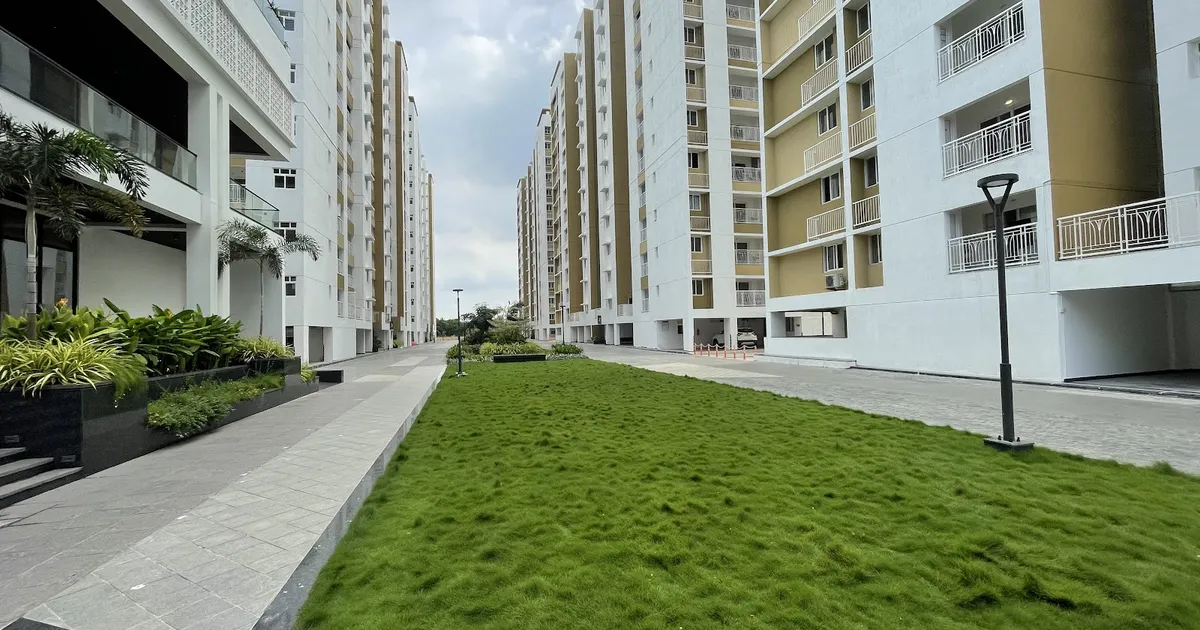
Telangana Cabinet Approves Merger Of 27 Municipalities Into GHMC Tripling City Area And Unlocking New Real Estate Development Zones Around Hyderabad

Telangana Cabinet Approves Historic GHMC Expansion: 27 Municipalities Merge, City Area Triples to 2000 Sq Km
On November 25, 2025, the Telangana Cabinet, chaired by Chief Minister A Revanth Reddy, approved a transformative decision that will reshape Hyderabad's urban landscape. The merger of 27 Urban Local Bodies—20 municipalities and seven municipal corporations—into the Greater Hyderabad Municipal Corporation (GHMC) represents one of the most significant structural reforms in the city's governance history. The decision comes as the current term of local bodies expires, with the GHMC's own tenure ending in February 2026.
The expansion will increase GHMC's jurisdiction from approximately 650 square kilometres to nearly 2,000 square kilometres. The areas being integrated include established suburban nodes such as Shamshabad, Manikonda, Narsingi, Kompally, and numerous localities along and beyond the Outer Ring Road (ORR). The Cabinet also approved amendments to both the GHMC Act and the Telangana Municipal Act to formally enable this consolidation. Ward delimitation was finalized in December 2025, expanding the number of wards from 150 to 300, with each corporator receiving ₹2 crore in development funds.
Why This Expansion Happened: The Governance Problem
Hyderabad's rapid urbanisation created a fragmented civic landscape. The core GHMC area maintained relatively uniform infrastructure standards—sanitation coverage, road quality, water supply, and property tax administration. The 27 surrounding municipalities, by contrast, suffered from uneven development, weak planning enforcement, and inconsistent service delivery. Between 2018 and 2024, peripheral municipalities lagged measurably behind GHMC areas in basic civic metrics. This disparity created planning chaos: overlapping jurisdictions, conflicting zoning decisions, and gaps in transport, drainage, and utility coordination.
The government's reasoning was straightforward: unregulated growth in outlying municipalities had generated sprawl without coherent infrastructure. Bringing these areas under a single metropolitan authority would enable uniform development standards, streamlined planning, and equitable access to civic services. The Cabinet memo specifically cited the need to prevent haphazard growth, congestion, environmental stress, and resource mismanagement.
Real Estate Impact: What Buyers and Investors Should Know
For property buyers, this expansion carries both immediate and long-term implications. Historically, areas brought within GHMC limits experience rising property values. Banks treat GHMC properties as more secure collateral. Developers prefer GHMC-regulated sites because approval timelines become more predictable. Buyers perceive GHMC status as a mark of governance quality and future infrastructure certainty. This confidence typically translates into demand premiums.
The newly merged zones—including Ghatkesar, Medchal, Adibatla, Shamshabad, and ORR-adjacent sectors—stand to benefit most. These areas host significant employment anchors: TCS Hyderabad, Foxconn facilities, the Rajiv Gandhi International Airport, E-City IT parks, and the Pharma City complex. Unified GHMC planning will enable better synchronisation of housing, commercial zoning, and transport connectivity around these employment hubs. Airport-centric development around Shamshabad can now coordinate more effectively with transport, housing, and commercial infrastructure.
However, buyers should be aware of potential downsides. GHMC property tax rates exceed those of the former municipalities, so residents in merged areas may face tax increases upon integration. Administrative integration of 27 separate municipal systems carries execution risk—staff integration, service standardisation, and billing system consolidation will take time. Delays in implementation could temporarily disrupt service delivery in some merged zones.
Properties along major highways and the ORR corridor are positioned to benefit fastest from unified planning and infrastructure upgrades. Investors targeting long-term appreciation should focus on areas with clear titles, approved layouts, and proximity to institutional anchors or transport corridors. Value gains typically accelerate 3–7 years after civic expansion, as infrastructure catches up and developer confidence translates into new project launches.
Administrative Restructuring: Three Corporations Instead of One Large GHMC
The Cabinet has signalled that the enlarged GHMC will eventually be divided into three or four independent municipal corporations, each managing approximately 500–650 square kilometres. This decentralisation aims to prevent the new GHMC from becoming administratively unwieldy. By February 2026, the government had already implemented this division, creating three entities: the original GHMC (core and central areas), Cyberabad Municipal Corporation (CMC, covering IT and western zones), and Malkajgiri Municipal Corporation (MMC, covering eastern and southern zones). Each corporation now operates with 12 zones and 60 circles across Hyderabad.
For property buyers, this restructuring adds a critical layer of due diligence. The corporation and zone governing a property now determine civic approvals, infrastructure quality, property tax administration, and future development planning. Buyers must verify which of the three corporations governs their target property before purchase.
Timeline and Next Steps
Ward delimitation was finalised by December 25, 2025, following a public objection period in which approximately 5,900 objections were filed. The delimitation notification addressed boundary alignment, colony splits, ward naming, and polling station placement. Municipal elections are scheduled for 2026. The government has allocated ₹2 crore per corporator division for civic amenity works, split between discretionary projects initiated by the corporator and works approved by the district in-charge minister. Detailed modalities—including staff integration, resource allocation, and service standardisation—are expected to be worked out in the coming months.
Political and Practical Concerns
Opposition parties, including the Bharatiya Rashtra Samithi (BRS), have raised concerns about the speed and depth of consultation during the merger process. Some civil society groups questioned the fairness of ward delimitation. The government maintains that objections were formally invited and addressed through gazette procedures. However, the expansion does alter Hyderabad's political map significantly—doubling the number of corporator positions ahead of 2026 elections, which may influence electoral dynamics.
There are also legitimate administrative risks. Merging 27 separate municipal systems means integrating different governance cultures, billing platforms, staff cadres, and service standards. Bureaucratic delays and temporary service disruptions are possible during the transition. The enlarged administration will require careful coordination to maintain service continuity while standardising operations.
Comparative Context: How This Stacks Against Earlier GHMC Expansions
Hyderabad has expanded its municipal boundaries before. In April 2007, the Municipal Corporation of Hyderabad was expanded into GHMC by merging 12 municipalities and eight gram panchayats, increasing wards from 100 to 150. That expansion, covering roughly 650 square kilometres, took several years to fully integrate. The current merger—tripling the area and doubling the wards—is significantly larger and more complex. The 2007 expansion did correlate with a sustained rise in property values across merged zones over the following decade, particularly in IT corridors and highway-adjacent areas. However, the initial 2–3 years saw service inconsistencies and administrative friction. Buyers who invested early and held through the integration period generally saw strong returns.
Key Areas Directly Affected by the Merger
- Shamshabad: Southern corridor with airport proximity; positioned for rapid residential and commercial growth tied to aviation and logistics.
- Ghatkesar & Medchal: Eastern industrial and residential corridor; benefits from unified planning with IT parks and manufacturing zones.
- Adibatla: Southern IT and commercial hub near TCS facilities and Pharma City; expected to see infrastructure acceleration.
- Narsingi & Manikonda: Established residential and IT-adjacent areas; will benefit from standardised civic services and improved connectivity.
- ORR Corridor Suburbs: Kompally, Dundigal, Tellapur, Ameenpur, Badangpet, and other ORR-abutting municipalities; positioned to see rapid commercialisation and residential densification under unified planning.
Future-Buyer FAQ
Q: When will the merged areas receive full GHMC services?
A: Service standardisation will occur gradually over 2–3 years. Critical services like property tax, building approvals, and waste management will be integrated first. Some peripheral areas may experience temporary service gaps during the transition. Buyers should factor in this adjustment period when evaluating newly merged zones.
Q: Will property prices in merged areas rise immediately?
A: Not necessarily. Historical data from the 2007 GHMC expansion shows that price appreciation typically accelerates 2–3 years after merger, as infrastructure improves and developer confidence builds. Early buyers benefit most, but they must be prepared to hold through an integration period with potential service inconsistencies.
Q: Which merged areas offer the best long-term value?
A: Areas along major highways, near the ORR, and adjacent to employment anchors (IT parks, airports, industrial zones) historically appreciate fastest. Shamshabad, Ghatkesar, Adibatla, and ORR-corridor suburbs are positioned for strong growth. However, legal clarity—clear titles, approved layouts, and verified RERA/municipal approvals—is essential before investing.
Q: How will property taxes change after merger?
A: GHMC property tax rates exceed those of the former municipalities. Residents in merged areas should expect tax increases, typically ranging from 20–40% depending on the property category and previous municipality. Tax rates will be harmonised gradually; the government has not announced a fixed timeline.
Q: Will the division into three corporations affect my property's value or approvals?
A: Yes. The corporation governing your property—GHMC, Cyberabad, or Malkajgiri—determines approval authority, infrastructure investment priorities, and service delivery standards. Properties in Cyberabad (IT-focused) and core GHMC (established urban areas) may see faster infrastructure upgrades. Verify your property's corporation before purchase; this now directly impacts long-term appreciation potential.
Q: Is now the right time to buy in merged areas?
A: Early buyers in the 2007 expansion saw strong 10-year returns. However, success required patience through 2–3 years of integration friction. Current merged zones (Shamshabad, Ghatkesar, Adibatla) offer attractive long-term potential, especially in ORR-adjacent and highway-corridor locations. But only invest if you can hold 5+ years and tolerate temporary service inconsistencies during the integration phase.
The Bigger Picture: Hyderabad's Path to Metropolitan Status
This merger positions Hyderabad as one of India's largest metropolitan regions by administrative area—comparable to or exceeding cities like Bangalore and Pune in geographic footprint. The expansion reflects a conscious shift from fragmented suburban governance to unified metropolitan planning. For real estate, this signals that Hyderabad's IT corridor, logistics hubs, and residential corridors will increasingly be managed as an integrated system rather than competing municipal fiefdoms. This coherence typically reduces planning friction and accelerates infrastructure delivery—both positive for long-term property values.
However, execution will determine outcomes. The 2007 expansion took 3–4 years to fully stabilise. The current merger, affecting 27 entities, is more complex. Buyers and investors should approach newly merged zones with realistic expectations: strong long-term potential, but near-term administrative turbulence and potential service gaps. Properties with clear legal status, proximity to employment anchors, and positions along transport corridors are most likely to benefit from the expansion.
Questions & Answers (0)
Terms & Conditions — Q&A
By submitting a question on RealtyPromoo, you agree to these terms:
1. Content Policy
- Your question must be a genuine real estate query.
- No abusive, defamatory, or promotional content.
- No personal contact info, broker referrals, or spam.
- Questions are reviewed by AI and may be edited for clarity, grammar, or politeness before publication.
2. Publication
- Your first name + last initial (e.g., "Rahul S.") will be displayed publicly with the answer.
- Your full name, phone number, and email are never displayed publicly.
- Once published, your question and answer become part of RealtyPromoo's content.
3. Phone & Email
- Your phone number is required so our team can share the answer with you on WhatsApp and assist with your query.
- Your phone number and email are stored securely and may be used by RealtyPromoo or its sales team to contact you regarding your query or related properties.
4. Answer Accuracy
- Answers are generated by AI based on publicly available information and the page context.
- Answers are informational only — not financial, legal, or investment advice.
- Always verify pricing, RERA status, and possession dates with the developer before any transaction.
- RealtyPromoo is not liable for decisions made based on AI-generated answers.
5. Pre-RERA / Pre-Launch Projects
- Some listed projects are pre-RERA / pre-launch. These listings are informational only.
- No booking, sale, or agreement is permitted before RERA registration.
- "Express Your Interest" forms collect contact details for future communication, not advance bookings.
6. Moderation
- RealtyPromoo reserves the right to delete, edit, or refuse to publish any question or answer.
7. Privacy
- Your data is handled per our Privacy Policy.
8. Jurisdiction
- These terms are governed by the laws of India.
- Disputes are subject to the courts of Noida, Uttar Pradesh.
Be the first to ask a question. Get an answer in seconds.
Questions & Answers
This article was drafted by Sayan Banerjee, Senior Property Analyst (Freelancer) with research support from artificial intelligence. AI assisted in gathering and summarizing information from primary news sources and official statements, and the final content was reviewed by our editor before publishing. News pages are timestamped at the time of writing and are not updated after publication.
Sources consulted: Primary press releases & company statements · Tier-1 business news (Economic Times, Livemint, Moneycontrol, Business Standard) · BSE / NSE corporate disclosures · Government notifications · State RERA filings (where relevant).
Published: 7 June 2026 · Spot an error? Let us know
Projects mentioned in this article
 Under Construction
Raheja Amaltis
by K Raheja Corp Homes (k Raheja Corp Real Estate Private Limited)
Sion West, Central Mumbai, Mumbai
₹6.03 Cr – ₹11 Cr
3 BHK, 3.5 BHK, 4 BHK
 Under Construction
Century Liva
by Century Real Estate Holdings Pvt. Ltd.
Yelahanka, Bangalore
₹1.59 Cr – ₹6.30 Cr
3 BHK, 4 BHK, Penthouse
 Pre-Launch
Century Midtown
by Century Real Estate Holdings Pvt. Ltd.
Devanahalli, Bangalore
₹82 Lakhs – ₹1.93 Cr (Apartments) | ₹98 Lakhs onwards (Plots)
1 BHK, 2 BHK, 3 BHK Apartments + Residential Plots
 New Launch
Shapoorji Pallonji The Dualis
by Shapoorji Pallonji Real Estate (joyville Shapoorji Housing Pvt. Ltd.)
Sector 46, Gurugram
₹6.84 Cr - ₹9.50 Cr
3 BHK + Servant, 4 BHK + Servant
Related News
 News
News
Netflix Leases 41,000 Sq Ft At CapitaLand ITPH Hitec City Hyderabad Marking First Major Base In City And Signalling New Wave Of Tech-Driven Real Estate Demand
Netflix signs a major lease for its first office in Hyderabad at CapitaLand's ITPH, Hitec City. Analysis of the impact on residential real estate in Madhapur.
 News
News
Hyderabad Regional Ring Road Southern Stretch Development Begins Boosting Real Estate In Rajendra Nagar Budvel And Outer Hyderabad Corridors
Hyderabad Regional Ring Road southern stretch enters construction phase. Rajendra Nagar and Budvel positioned for 25-40% appreciation as RRR connectivity...
 News
News
Maharashtra Government Advances Mumbai Water Metro Project To Expand Urban Water Transport Network Across Mumbai Metropolitan Region Impacting Waterfront And Harbour-Adjacent Real Estate
Maharashtra advances Water Metro project with 45 terminals across MMR by 2036. Impact on Worli, Bandra, Versova, Navi Mumbai real estate prices and waterfront...
 News
News
Mumbai Water Metro Project Approved To Reduce Congestion Across Mumbai Metropolitan Region With Water Transport Network Expansion Boosting Waterfront Real Estate Values
Maharashtra approves ₹6,067 crore Mumbai Water Metro Project on March 17, 2026. Phase 1 includes 16 routes, 26 terminals across MMR. Impact on Bandra, Worli...