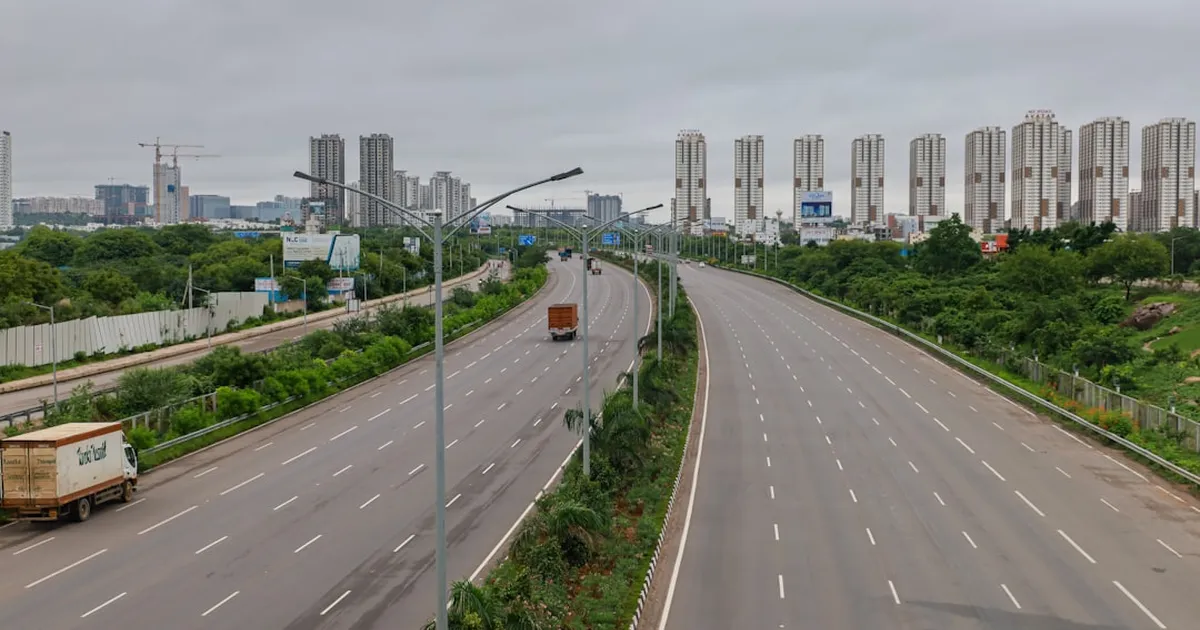
Hyderabad Regional Ring Road Southern Stretch Development Begins Boosting Real Estate In Rajendra Nagar Budvel And Outer Hyderabad Corridors

Hyderabad Regional Ring Road Southern Stretch Advances: Rajendra Nagar and Budvel Set for Major Growth
The southern stretch of Hyderabad's Regional Ring Road (RRR) has moved into active development phase, with land acquisition progressing across critical zones and infrastructure work accelerating through mid-2026. As of the latest project updates, the 201-kilometre southern corridor—spanning from Choutuppal through Amangal to Sangareddy—is now seeing tangible momentum after years of planning and regulatory approvals. Foundation pillars for three major flyovers have been installed in Choutuppal and Ibrahimpatnam, and compensation finalisation is underway for properties within a 15-kilometre radius of key interchange zones. The Telangana government has also formally incorporated the southern stretch within the expanded Hyderabad Metropolitan Region (HMDA) boundary, signalling institutional commitment to coordinated development. This marks a decisive shift from paperwork to pavement for one of India's most ambitious outer-ring expressway projects.
What This Means for Rajendra Nagar and Budvel Homebuyers
For buyers and investors in Rajendra Nagar and Budvel, the RRR's southern stretch development carries immediate and long-term implications. These localities sit squarely within the project's influence zone—Rajendra Nagar is roughly 12–15 kilometres from the proposed Choutuppal interchange, while Budvel sits even closer to the emerging corridor. Historically, Rajendra Nagar apartments have appreciated at 15.1% year-on-year, with premium projects like Godrej Regal Pavilion and The Prestige City Hyderabad leading the price curve. Once the RRR opens, cross-corridor connectivity will dramatically improve, reducing commute friction to western IT zones (Gachibowli, Manikonda, HITEC City) and directly to Rajiv Gandhi International Airport without routing through Hyderabad's congested urban core. This structural improvement in accessibility typically drives 25–40% price appreciation in surrounding areas over a 3–5 year horizon. However, buyers must also acknowledge the near-term disruption: ongoing construction, dust, and temporary traffic congestion are unavoidable realities in the 2026–2028 window. Properties already developed with occupancy certificates will weather this better than under-construction projects.
Expert Analysis: Why This Acceleration Matters
The RRR southern stretch's transition from DPR (Detailed Project Report) phase to active land acquisition and structural work reflects a fundamental shift in Telangana's infrastructure governance. The state government's decision in June 2025 to expand the southern corridor from 182 kilometres to 201 kilometres, and to absorb 50% of land acquisition costs through state funds, signals genuine political will. This contrasts sharply with earlier delays (2017–2023) when bureaucratic hesitation and funding disputes stalled progress. The upgrade of the northern segment from four lanes to six lanes, approved in May 2025, also indicates that planners now anticipate RRR-driven demand will exceed original capacity forecasts. For real estate, this is a bullish signal: infrastructure designers don't over-engineer for hypothetical demand. They do so when demographic and economic trends point to genuine congestion. Rajendra Nagar's position as a growing IT corridor—with the proposed 350-acre IT cluster stretching from Budvel to Kismatpur—aligns perfectly with this RRR-enabled decentralisation narrative.
Timeline and Expected Milestones
The Telangana CM declared March 2026 as the target date for opening the first commercial stretch of the RRR (northern segment), though this refers to the northern corridor rather than the southern stretch. For the southern corridor, the current timeline is more conservative: land acquisition is expected to accelerate through 2026, with detailed tender documentation and contractor selection likely by late 2026 or early 2027. Construction on the full southern stretch is anticipated to begin in 2027, with phased completion targeted for 2028–2030. Buyers should expect the most visible on-ground activity—heavy machinery, material transport, and utility relocation—to peak in 2027–2028. Property price appreciation often begins 12–18 months before construction visibility, meaning early 2026 through 2027 is the window for value capture before the crowd recognises the opportunity.
Key Localities and Corridors Directly Benefiting
- Rajendra Nagar: Southern Hyderabad locality with strong IT proximity, currently mid-range pricing (₹8,400–8,700 per sq ft), positioned to see 25–35% appreciation post-RRR opening.
- Budvel: Emerging growth hub 14.2 km from city centre, strategic location near Gandipet Lake, benefiting from ORR and RRR dual connectivity, rental yields around 3.2%.
- Choutuppal: Proposed major interchange zone, currently semi-rural, expected to transform into logistics and satellite township hub.
- Amangal and Kandukur: Southern arc villages where land acquisition is underway, positioned for long-term township and industrial park development.
- Chevella and Shankarpally: Western and southwestern growth nodes already seeing residential project launches, RRR connectivity will unlock logistics and warehousing clusters.
Infrastructure Connectivity Gains
The RRR southern stretch's integration with National Highways NH-44, NH-65, NH-163, and NH-765 creates a genuine bypass network that diverts inter-state and inter-district freight away from Hyderabad's urban core. For residents, this translates to cleaner air, less congestion on existing roads like the Outer Ring Road and PV Narasimha Rao Expressway, and faster access to employment zones. Rajendra Nagar, which currently relies on ORR and PV Narasimha Rao Expressway for connectivity, will gain a second arterial route to western IT parks and the airport. Budvel will shift from a fringe locality into a mid-ring hub with multi-directional connectivity. The proposed radial road networks linking the RRR back to the ORR will further enhance accessibility, creating a genuine two-ring system around Hyderabad rather than today's single-ring constraint.
Risks and Honest Concerns for Buyers
Construction disruption is real and will be prolonged. The 2027–2030 period will see heavy traffic on approach roads, dust from quarrying and earthwork, and temporary utility disruptions. Properties in the immediate 2–3 kilometre zone of major interchanges may face noise and vibration during pile-driving and structural work. Land acquisition disputes, though compensation has been finalised in some zones, may resurface in contested areas where farmer groups or landowners dispute valuations—delays are common. Environmental concerns have also surfaced: the RRR will pass through reserve forest zones in some stretches, requiring ongoing environmental compliance monitoring. Additionally, the project's track record shows tender delays and cost escalations; the northern segment's cost doubled from ₹7,104 crore to ₹15,627 crore after the four-to-six lane upgrade. Similar scope changes could affect the southern stretch timeline. Finally, speculative buying on the premise of "future RRR connectivity" carries risk if you lack a 5–10 year investment horizon. Early gains accrue to buyers who purchase 18–24 months before opening; late entrants often pay peak prices.
Current Market Pricing and Comparative Context
Rajendra Nagar apartments currently trade at ₹5,650–₹8,700 per square foot, with projects like Godrej Regal Pavilion (13-acre gated community with 2, 3, 4 BHK units) commanding premium pricing within this range. Budvel, being less developed, offers more affordable entry points but with higher execution risk on project timelines. For comparison, Gachibowli (20 km away) and HITEC City (21 km away) trade at ₹10,000–₹14,000 per sq ft—Rajendra Nagar's current 20–30% discount to these established IT hubs reflects its growth story. Once RRR connectivity is live, this discount is likely to narrow significantly. Rental yields in Rajendra Nagar average 3.2% annually, with higher yields (3.5–4%) available in projects positioned near metro stations or IT parks. Budvel, being newer, shows less rental data, but early projects report 2.8–3.5% yields.
Should You Buy Now or Wait?
The answer depends on your investment horizon and risk tolerance. If you plan to occupy or hold for 5+ years, buying in Rajendra Nagar or Budvel in 2026 is strategically sound—you capture the appreciation cycle before RRR opens and benefit from the infrastructure upside. If you are a short-term trader seeking quick returns, wait for the first tender awards and visible construction (late 2026/early 2027) before entering, as this is when broader market recognition drives faster price momentum. For NRI or institutional investors, the 15% Y-o-Y appreciation track record in Rajendra Nagar and the structural RRR catalyst suggest a medium-term hold (3–5 years) is prudent. Avoid purely speculative plots in remote villages along the RRR alignment unless you have deep local knowledge and a 10-year view—not all villages benefit equally, and those far from interchange zones may see muted appreciation.
Frequently Asked Questions
Q: When will the southern stretch RRR actually open to traffic?
A: The southern 201-km corridor is expected to begin construction in 2027, with phased opening by 2028–2030. The northern segment targets March 2026 for the first commercial stretch, but the southern route is a longer-term play.
Q: Will property prices in Rajendra Nagar rise significantly once RRR opens?
A: Historical data from similar ring-road projects (Delhi's Outer Ring Road, Bangalore's Peripheral Ring Road) shows 30–50% appreciation in surrounding areas over 3–5 years post-opening. Rajendra Nagar's current 15% Y-o-Y trend could accelerate once RRR connectivity is live, but this is not guaranteed—market sentiment, interest rates, and broader economic conditions matter.
Q: Is it safe to buy under-construction projects in Rajendra Nagar right now?
A: Completed, ready-to-occupy projects (like Godrej Regal Pavilion) carry lower risk and will benefit from RRR opening without occupancy delays. Under-construction projects depend on developer execution capability and financing; verify RERA registration, builder track record, and completion timelines before committing.
Q: Will the RRR reduce my commute time to IT hubs from Rajendra Nagar?
A: Yes. Currently, reaching Gachibowli or HITEC City from Rajendra Nagar requires navigating ORR and inner-city roads, adding 45–60 minutes during peak hours. RRR's cross-corridor design will create a direct bypass, reducing commute to 25–35 minutes for many IT workers.
Q: Should I invest in Budvel or Rajendra Nagar?
A: Rajendra Nagar is more developed with established schools, hospitals, and malls; it carries lower execution risk but is more expensive. Budvel is cheaper and offers higher upside if you're comfortable with ongoing development and construction disruption. A balanced approach: allocate 60% to Rajendra Nagar (stability) and 40% to Budvel (growth upside).
Q: Will the RRR cause water scarcity in these areas?
A: Water stress is already a concern in Rajendra Nagar and southern Hyderabad during peak summer. The RRR itself doesn't directly cause scarcity, but rapid population influx post-opening will increase demand. Verify water supply agreements and HMDA infrastructure plans before buying; projects with independent water harvesting systems are preferable.
Questions & Answers (0)
Terms & Conditions — Q&A
By submitting a question on RealtyPromoo, you agree to these terms:
1. Content Policy
- Your question must be a genuine real estate query.
- No abusive, defamatory, or promotional content.
- No personal contact info, broker referrals, or spam.
- Questions are reviewed by AI and may be edited for clarity, grammar, or politeness before publication.
2. Publication
- Your first name + last initial (e.g., "Rahul S.") will be displayed publicly with the answer.
- Your full name, phone number, and email are never displayed publicly.
- Once published, your question and answer become part of RealtyPromoo's content.
3. Phone & Email
- Your phone number is required so our team can share the answer with you on WhatsApp and assist with your query.
- Your phone number and email are stored securely and may be used by RealtyPromoo or its sales team to contact you regarding your query or related properties.
4. Answer Accuracy
- Answers are generated by AI based on publicly available information and the page context.
- Answers are informational only — not financial, legal, or investment advice.
- Always verify pricing, RERA status, and possession dates with the developer before any transaction.
- RealtyPromoo is not liable for decisions made based on AI-generated answers.
5. Pre-RERA / Pre-Launch Projects
- Some listed projects are pre-RERA / pre-launch. These listings are informational only.
- No booking, sale, or agreement is permitted before RERA registration.
- "Express Your Interest" forms collect contact details for future communication, not advance bookings.
6. Moderation
- RealtyPromoo reserves the right to delete, edit, or refuse to publish any question or answer.
7. Privacy
- Your data is handled per our Privacy Policy.
8. Jurisdiction
- These terms are governed by the laws of India.
- Disputes are subject to the courts of Noida, Uttar Pradesh.
Be the first to ask a question. Get an answer in seconds.
Questions & Answers
This article was drafted by Sayan Banerjee, Senior Property Analyst (Freelancer) with research support from artificial intelligence. AI assisted in gathering and summarizing information from primary news sources and official statements, and the final content was reviewed by our editor before publishing. News pages are timestamped at the time of writing and are not updated after publication.
Sources consulted: Primary press releases & company statements · Tier-1 business news (Economic Times, Livemint, Moneycontrol, Business Standard) · BSE / NSE corporate disclosures · Government notifications · State RERA filings (where relevant).
Published: 7 June 2026 · Spot an error? Let us know
Projects mentioned in this article
 Pre-Launch
Prestige Imperial park, Budvel, Hyderabad
by Prestige Group
Rajendra Nagar, Hyderabad
₹0.75 Cr - ₹3.00 Cr
1 BHK, 2 BHK, 3 BHK, 4 BHK
 New Launch/Under Construction
Prestige Southern Star
by Prestige Group
Akshayanagar, Begur Road, Off Bannerghatta Road, Bangalore
₹84 L - ₹3.99 Cr
1 BHK, 2 BHK, 3 BHK, 3.5 BHK, 4 BHK
 New Launch
Prestige Golden Grove
by Prestige Group
Tellapur–velimela–kollur, West Hyderabad, Hyderabad
₹93 L – ₹2.40 Cr+
2 BHK, 3 BHK, 4 BHK
 New Launch / Under Construction
Trump Residences Sector 69 Gurugram
by Tribeca Creators LLP
Sector 69, SPR Road (southern Peripheral Road), Gurugram
₹8 Cr – ₹20 Cr+
3 BHK, 4 BHK, 5 BHK Penthouse
Related News
 News
News
Hyderabad Outer Ring Road Phase 2 Expansion And Pharma City Connectivity Boost Real Estate Demand In Rajendra Nagar, Budvel And Kokapet Corridors In 2026
Hyderabad ORR expansion and Pharma City metro connectivity unlock growth in Rajendra Nagar and Kokapet. Current pricing, risks, and buyer strategy for 2026...
 News
News
Hyderabad Greenfield Radial Road Phase 2 Order Secured By L&t Transportation For 22.3-Km Access-Controlled Corridor Boosting Real Estate In Outer Ring Road Zones
L&T has secured a significant contract to build a 22.3 km access-controlled radial road, boosting real estate in Dundigal, Bowrampet, and ORR zones.
 News
News
Sewri-Worli Elevated Connector 4.5-Km Project Links Mumbai Trans Harbour Link To Western Coastal Road Network Driving Real Estate Demand In Wadala Parel And Worli Micro-Markets
Analysis of the 4.5-km Sewri-Worli Connector's impact on property prices in Wadala, Parel, and Worli. How the MTHL link is driving real estate demand in 2026.
 News
News
Penthouse Worth 200cr Sold In Godrej Samaris- Golf Course Road Gurugram By Godrej Properties, Verified By Realtypromoo, Luxury Real Estate Guide
A penthouse at Godrej Samaris on Gurugram's Golf Course Road has been booked for ₹200 crore in pre-launch — set to top DLF Camellias' ₹190 cr record.