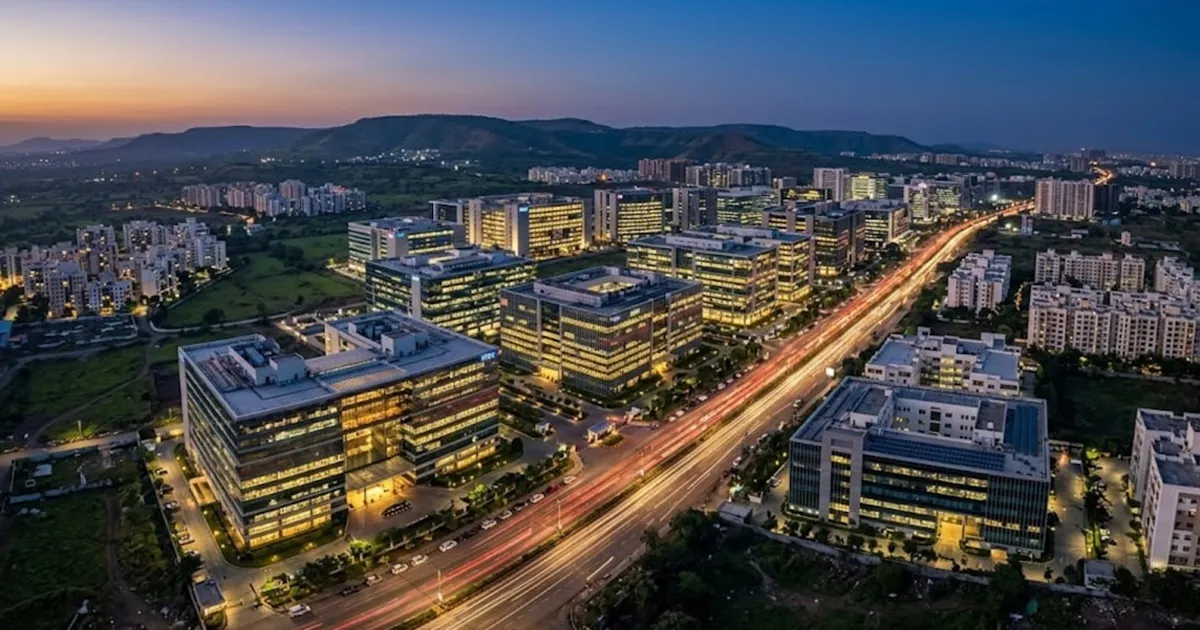
Why Pune Real Estate is So Slow?

Pune Real Estate Slowdown in 2026: What's Really Happening
Pune's real estate market experienced a temporary slowdown at the start of 2026, with property registrations declining 17% year-on-year, dropping to 14,527 units in January 2026 compared to 17,449 units in January 2025. However, this headline number masks a far more nuanced market story. While there was a year-on-year slowdown, month-on-month figures pointed to recovery after the year-end slump, with registrations rising from 12,079 in December 2025, indicating renewed activity and buyer movement entering the new year.
India's housing market across the top seven cities witnessed a significant slowdown in price growth during the January–March 2026 quarter, as home sales declined amid weakening consumer sentiment triggered by the West Asia conflict, with housing sales dropping 7% in volume and 6% in value compared to the previous quarter. Pune posted 2% quarterly growth, reaching ₹8,220 per sq ft.
Why the Slowdown? Multiple Factors at Play
The slowdown stems from several converging pressures. The technology industry, which is Pune's main source of demand, saw significant layoffs and hiring freezes, especially in the second and third quarters of 2025. Geopolitical tensions affected supply chains and investor sentiment, and tariff uncertainties unsettled NRI investment flows. The impact of the Iran war was clearly visible in the first quarter, particularly in March, as uncertainty weighed on buyer confidence, with large numbers of prospective Middle East homebuyers, who invest significantly in Indian real estate, hitting the pause button under the war cloud.
Supply-demand imbalance is another critical issue. Developers have been supplying more units than can be absorbed by buyers for the 14th consecutive quarter, with the gap between supply and absorption widening to over 10,000 units, the highest since Q1 2023. This excess supply has tied up developer capital and threatens to impact pricing negatively in 2026.
Affordability pressures are reshaping buyer behavior. As of the end of 2025, affordability remains a problem in Pune, with the market movement towards the mid-premium and luxury housing segments driving many buyers either to the outskirts or off the market. Rising prices have made buyers more selective, leading to slower but more stable absorption.
The Positive Undercurrent: Quality Over Volume
Despite lower transaction volumes, the market is not in crisis. While registrations moderated year-on-year, the relatively lower decline in revenue reflects continued momentum in higher ticket-size transactions, with the relatively smaller fall in stamp duty revenue indicating that higher-value and larger transactions have still been going on. A defining feature of Q1 2026 was the dominance of high-ticket and premium homes, with sales of properties priced above ₹1 crore growing by 11% on a year-on-year basis.
Although homes priced below ₹1 crore continued to be the most visible in the market, the cumulative percentage of homes in this segment eased to 82% in January 2026, with the ₹1 crore – ₹2.5 crore segment accounting for 14% of registrations, revealing that although affordable homes are the major force in the market, demand for higher-value homes is gradually increasing. This shift indicates healthy market segmentation rather than broad-based weakness.
Impact on Homebuyers: Where Should You Focus?
Pune's real estate market in 2026 is expected to see steady and selective growth, with demand remaining strong in areas with employment hubs and infrastructure upgrades, while oversupplied or poorly connected locations may experience slower price appreciation. The key growth corridors in Pune for 2026 include Hinjewadi–Wakad, Kharadi–Wagholi, Talegaon–Chakan, and Hadapsar–Undri, driven by IT hubs, infrastructure development, and improving connectivity.
Based on registration velocity and new launch pricing, West Pune (Baner, Aundh, Kothrud) is expected to see price growth of 2–3% over the quarter, while Hinjewadi Belt / PCMC (Wakad, Punawale, Marunji) is projected for 2.5–3.5% quarterly growth, representing the highest near-term momentum in the Pune market. The Reserve Bank of India's rate policy is a significant macro factor, with the Monetary Policy Committee delivering a 25 basis point reduction in February 2026, bringing the repo rate to 6.25%.
For buyers on the fence: A 50 basis point rate reduction on a ₹1 crore loan over 20 years reduces the EMI by approximately ₹3,200 per month — equivalent to a 3.5–4% improvement in affordability, potentially tipping the calculation toward qualifying for buyers who have been on the margin of loan eligibility.
The Micro-Market Reality: One City, Many Markets
Pune is no longer one market; it's a collection of micro-markets behaving very differently. Central Pune, which includes areas of Haveli Taluka, Pune Municipal Corporation (PMC) and Pimpri Chinchwad Municipal Corporation (PCMC), reached 67% of the market share in January 2026, with the massive concentration indicating that Central Pune continues to be the main residential hub.
Locations like Mahalunge and Punawale are benefiting from spillover demand from Baner and Wakad, with these areas witnessing increased interest in township developments, while Moshi, Wagholi, and Undri are attracting first-time buyers due to lower entry prices and improving infrastructure.
Infrastructure as the Game-Changer
The delayed completion of the Pune Metro Phase 1 is expected to happen in mid-to-late 2026, potentially causing prices in 500-meter corridors to go up by 15–20%. The Ring Road will open up areas on the outskirts, with impacted areas expected to see prices appreciate by 20–25% as redevelopment nodes form at important intersections.
The Bottom Line: Slowdown ≠ Decline
Residential sales saw a marginal dip of around 3% in 2025, reaching about 50,800 units, as buyers became more selective amid rising prices, a shift that signals maturity rather than slowdown. The future of real estate in Pune appears structurally sound, underpinned by continued economic growth, infrastructure maturation, and demographic advantages, with industry projections suggesting healthy growth across India's top cities, with Pune expected to outperform national averages.
As the city moves into 2026, Pune's underlying discipline is becoming even more visible, with the property market entering a more measured, intelligence-driven phase after a period of strong post-pandemic momentum and price appreciation. For homebuyers, this slowdown presents an opportunity to be selective rather than rushed—but waiting for a significant correction may not be the right strategy, especially in micro-markets with strong employment anchors and infrastructure support.
Questions & Answers (0)
Terms & Conditions — Q&A
By submitting a question on RealtyPromoo, you agree to these terms:
1. Content Policy
- Your question must be a genuine real estate query.
- No abusive, defamatory, or promotional content.
- No personal contact info, broker referrals, or spam.
- Questions are reviewed by AI and may be edited for clarity, grammar, or politeness before publication.
2. Publication
- Your first name + last initial (e.g., "Rahul S.") will be displayed publicly with the answer.
- Your full name, phone number, and email are never displayed publicly.
- Once published, your question and answer become part of RealtyPromoo's content.
3. Phone & Email
- Your phone number is required so our team can share the answer with you on WhatsApp and assist with your query.
- Your phone number and email are stored securely and may be used by RealtyPromoo or its sales team to contact you regarding your query or related properties.
4. Answer Accuracy
- Answers are generated by AI based on publicly available information and the page context.
- Answers are informational only — not financial, legal, or investment advice.
- Always verify pricing, RERA status, and possession dates with the developer before any transaction.
- RealtyPromoo is not liable for decisions made based on AI-generated answers.
5. Pre-RERA / Pre-Launch Projects
- Some listed projects are pre-RERA / pre-launch. These listings are informational only.
- No booking, sale, or agreement is permitted before RERA registration.
- "Express Your Interest" forms collect contact details for future communication, not advance bookings.
6. Moderation
- RealtyPromoo reserves the right to delete, edit, or refuse to publish any question or answer.
7. Privacy
- Your data is handled per our Privacy Policy.
8. Jurisdiction
- These terms are governed by the laws of India.
- Disputes are subject to the courts of Noida, Uttar Pradesh.
Be the first to ask a question. Get an answer in seconds.
Questions & Answers
This article was drafted by Manoj Singh, Founder & Editor-in-Chief with research support from artificial intelligence. AI assisted in gathering and summarizing information from primary news sources and official statements, and the final content was reviewed by our editor before publishing. News pages are timestamped at the time of writing and are not updated after publication.
Sources consulted: Primary press releases & company statements · Tier-1 business news (Economic Times, Livemint, Moneycontrol, Business Standard) · BSE / NSE corporate disclosures · Government notifications · State RERA filings (where relevant).
Published: 18 May 2026 · Spot an error? Let us know
Projects mentioned in this article
 New Launch
Birla Punya
by Birla Estates Private Limited
Sangamwadi, Central Pune, Pune
₹86 Lakhs – ₹4.34 Crores
1 BHK, 2 BHK, 3 BHK, 3.5 BHK, 4.5 BHK
 Under Construction
Raheja Amaltis
by K Raheja Corp Homes (k Raheja Corp Real Estate Private Limited)
Sion West, Central Mumbai, Mumbai
₹6.03 Cr – ₹11 Cr
3 BHK, 3.5 BHK, 4 BHK
 Under Construction
Century Liva
by Century Real Estate Holdings Pvt. Ltd.
Yelahanka, Bangalore
₹1.59 Cr – ₹6.30 Cr
3 BHK, 4 BHK, Penthouse
 Pre-Launch
Century Midtown
by Century Real Estate Holdings Pvt. Ltd.
Devanahalli, Bangalore
₹82 Lakhs – ₹1.93 Cr (Apartments) | ₹98 Lakhs onwards (Plots)
1 BHK, 2 BHK, 3 BHK Apartments + Residential Plots
Related News
 News
News
Pune Inner Ring Road Approved And Under Construction: How The 128-Km Orbital Corridor Will Transform Hinjewadi Baner Balewadi And Mahalunge Real Estate In 2026
Pune Inner Ring Road 83-128 km corridor approved and under construction. PMRDA accelerating land acquisition. Impact on Hinjewadi, Wagholi, Balewadi real...
 News
News
India's Listed Real Estate Developers Reduce Home-Market Dependence As Geographic Diversification Accelerates In Fy26 With Godrej Prestige Sobha And Lodha Expanding Across Seven Cities
India's top 11 listed developers hit ₹1.48L crore pre-sales in FY26 by diversifying beyond home markets. Godrej, Prestige, Lodha expand across MMR, NCR...
 News
News
Up-RERA Approves Over 400 New Real Estate Projects In 2026 As Project Registrations Surge Beyond Noida And Lucknow Into Tier-2 And Tier-3 Cities Amid Jewar Airport And Expressway Growth
UP-RERA expects 400+ project approvals in 2026 vs 308 in 2025, driven by Jewar Airport, Ganga Expressway, and Tier-2 city growth across Uttar Pradesh real...
 News
News
Maharashtra Government Advances Mumbai Water Metro Project To Expand Urban Water Transport Network Across Mumbai Metropolitan Region Impacting Waterfront And Harbour-Adjacent Real Estate
Maharashtra advances Water Metro project with 45 terminals across MMR by 2036. Impact on Worli, Bandra, Versova, Navi Mumbai real estate prices and waterfront...