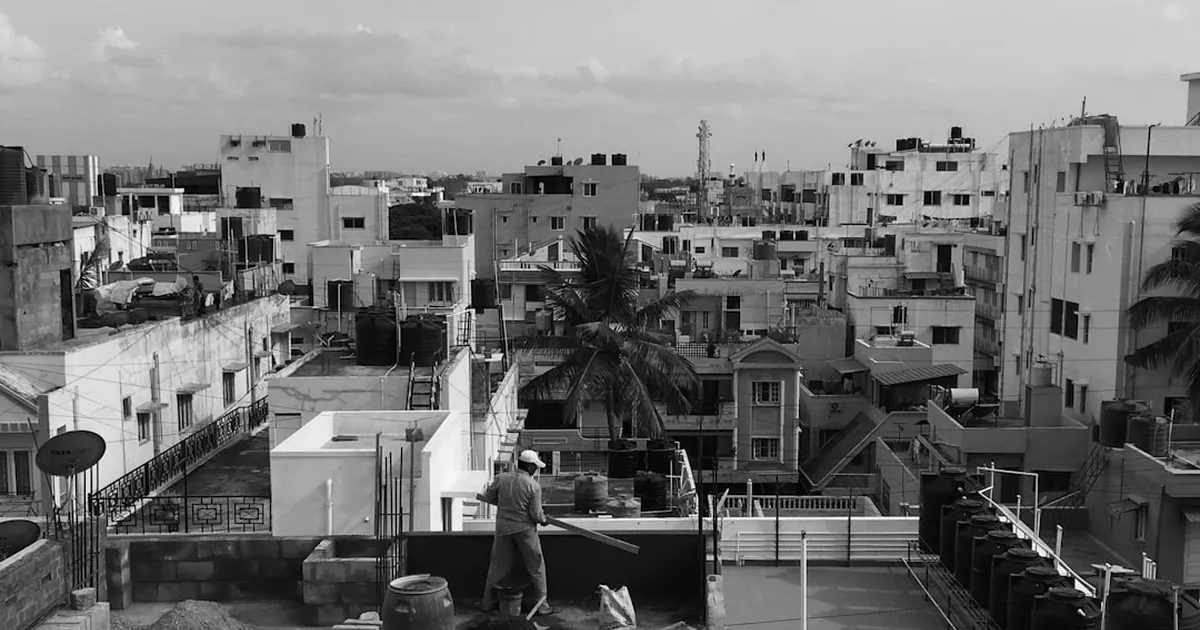
Telangana Cabinet Clears Policy To Convert Idle Factory Land For Residential And Commercial Development Unlocking Major Urban Real Estate Supply In Hyderabad

Telangana Unlocks 9,292 Acres of Idle Industrial Land for Mixed-Use Development
The Telangana Cabinet's approval of the Hyderabad Industrial Lands Transformation Policy (HILTP) in November 2025 represents one of the most consequential urban land-use shifts the city has witnessed in recent decades. The policy opens the door for conversion of 9,292 acres of long-stalled industrial land—much of it now embedded within Hyderabad's urban core—into residential, commercial, IT, healthcare, and mixed-use zones. Of this total, approximately 4,740 acres of plotted industrial land are immediately eligible for conversion under the framework. The decision arrives as Hyderabad continues its ascent as a global IT and business hub, and the supply unlock comes at a moment when the city faces acute land scarcity for residential and commercial expansion.
The policy targets industrial estates and parks established 50 to 60 years ago in localities such as Balanagar, Jeedimetla, Sanathnagar, Uppal, Nacharam, Moula Ali, Medchal, Patancheru, Kushaiguda, Charlapally, and Ramachandrapuram. These areas, once on Hyderabad's periphery, have been absorbed into densely populated residential and commercial neighbourhoods as the city expanded. Most of the industrial units in these zones have already shifted operations beyond the Outer Ring Road (ORR) under earlier government directives aimed at reducing pollution in populated areas. The result: large parcels of strategically located land sit underutilised despite soaring demand for urban real estate. The HILTP provides the mechanism to unlock this latent value.
How the Policy Works: Mechanism and Timeline
Industrial landowners seeking conversion must apply through an online portal operated by the Telangana Industrial Infrastructure Corporation (TGIIC). The conversion process involves payment of a one-time Development Impact Fee (DIF)—structured at 30% of the sub-registrar office (SRO) market value for properties on roads less than 80 feet wide, and 50% for properties on wider roads. To encourage early adoption, the government has offered an incentive: applications submitted on or before 30 June 2026 will be assessed using existing SRO rates, with an upfront DIF payment of only 10%, with the balance due within 90 days. After 30 June, the fee structure reverts to standard rates and SRO valuations are recalculated. The operational guidelines were formally issued in May 2026, with the dedicated TGIIC portal now live for submissions.
Once approved, converted land may be developed for residential housing, IT and ITES campuses, retail hubs, hotels, offices, schools, hospitals, research institutions, and recreational facilities. The policy also mandates that 25% of all revenue generated from conversion fees be reinvested in upgrading infrastructure within transformed areas and in developing new industrial parks outside the ORR. This ensures that industrial growth continues beyond the city core, maintaining the state's manufacturing and logistics capacity while enabling urban redevelopment.
Impact on Homebuyers and Real Estate Markets
For homebuyers, the HILTP signals a fundamental shift in Hyderabad's housing supply trajectory. The unlocking of nearly 5,000 acres of developable land in prime urban corridors will likely moderate price escalation in the medium term, even as it creates new investment opportunities. Localities like Balanagar—already seeing residential growth—stand to benefit from organised, large-scale mixed-use redevelopment. Current property rates in Balanagar range from ₹5,550 to ₹9,300 per square foot; the influx of new supply from converted industrial land may introduce competitive pricing dynamics, particularly in the affordable-to-mid-range segments.
Buyers considering properties in industrial-adjacent areas should understand both the upside and the transition risk. Positive catalysts include improved infrastructure, cleaner air as polluting units relocate, and access to new retail, healthcare, and educational facilities. However, the conversion process will take time—applications have a six-month window (ending 30 June 2026), and approvals will follow over subsequent quarters. Actual construction on converted parcels will span years. Buyers purchasing in these zones today should factor in a 2–3 year horizon before major redevelopment becomes visible. Additionally, ongoing industrial operations in some approved zones may continue during a limited transition period, meaning some areas will remain mixed-use environments for several years before full transformation.
For investors, the policy creates a clear arbitrage opportunity: industrial landowners holding assets in these 22 designated estates can now formalise conversion and unlock value. Developers with acquisition capability in these zones should move quickly, as early approvals (before 30 June 2026) lock in lower DIF rates. Residential developers, in particular, will find large contiguous parcels in high-demand corridors—a rarity in Hyderabad's constrained land market.
Expert Analysis: Why This Policy Matters
The HILTP reflects a pragmatic recognition of urban evolution. Industrial zones created in the 1960s–1970s were sited on the city's outskirts; six decades of rapid urbanisation have rendered them incompatible with dense residential neighbourhoods. Outdated technology, supply chain disruptions, rising compliance costs, and environmental concerns have made many units economically unviable. Rather than perpetuate stagnation, the Telangana government has chosen to formalise a transition that is already underway informally.
The policy also signals confidence in Hyderabad's long-term growth. The city's emergence as a global IT, pharmaceutical, and data-centre hub has created unprecedented demand for office, residential, and mixed-use real estate. Land scarcity has been a constraint on this growth; the HILTP removes that constraint by making available thousands of acres in locations already served by roads, power, water, and connectivity. This is not greenfield expansion—it is strategic infill within the urban core.
One notable feature is the revenue-sharing mechanism. By mandating that 25% of DIF revenue be invested in new industrial parks outside the ORR, the government is not simply converting industrial land; it is actively decentralising industrial capacity. This maintains Hyderabad's manufacturing and logistics base while freeing prime urban land for higher-value uses. It is a balanced approach, though critics have raised concerns about valuation fairness and the potential for speculative behaviour. The opposition BRS party has labelled the policy controversial, citing concerns about land values and procedural transparency. These criticisms merit monitoring, particularly as approvals begin and early conversion decisions set precedent.
What to Expect Next
The immediate timeline is clear. The 30 June 2026 application deadline creates urgency for industrial landowners and developers. Applications submitted by this date will benefit from the 10% upfront DIF rate and existing SRO valuations. After this date, rates and valuations will shift, making early action financially attractive. Approvals are expected to flow through the TGIIC over the subsequent 6–12 months. Once approvals are granted, landowners will begin planning and seeking development partners. The first major redevelopment announcements—developer partnerships, master-plan reveals, and project launches—are likely to emerge in late 2026 and into 2027.
Market reaction will be gradual. Localities like Balanagar, Jeedimetla, and Sanathnagar will see increased broker activity and speculative interest as conversion approvals are announced. Prices may stabilise or soften in the near term as the market absorbs the supply signal. Longer term (2–3 years), as construction begins on converted parcels, new residential, commercial, and IT projects will reshape these neighbourhoods. Hyderabad's overall real estate market will benefit from the supply expansion, particularly in the affordable and mid-market segments where land scarcity has been most acute.
Related Projects and Areas Directly Affected
- IDA Nacharam (700 acres): One of the largest industrial estates, Nacharam is a manufacturing hub now surrounded by residential growth; conversion will unlock significant mixed-use potential.
- Industrial Park Jeedimetla (980 acres): A major industrial corridor in North Hyderabad; residential projects are already emerging in adjacent areas, and HILTP conversion will accelerate this trend.
- Industrial Park Uppal (447 acres): Located in East Hyderabad, Uppal is transitioning from pure industrial to mixed-use; the policy formalises this shift.
- Industrial Park Cherlapally (762 acres): A significant industrial estate eligible for conversion; its location near emerging residential and IT zones makes it a prime redevelopment candidate.
- Industrial Park Moula Ali (168 acres): A smaller but strategically located estate; conversion will support infill development in South Hyderabad.
Comparative Context: How Hyderabad Compares
Hyderabad's HILTP is not without precedent in Indian urban policy. Cities like Bangalore and Chennai have undertaken industrial land conversions, though typically on smaller scales and with less formal policy frameworks. What distinguishes Hyderabad's approach is its scale (9,292 acres), its formal fee structure, and its explicit mandate to reinvest in new industrial capacity outside the city core. This makes it a more systematic and transparent mechanism than ad-hoc conversions seen elsewhere.
For homebuyers comparing Hyderabad to other IT hubs, the HILTP is a positive signal. It suggests the state government is actively managing growth rather than allowing organic, unplanned sprawl. The availability of new land in established corridors will support competitive pricing and diverse project typologies—from affordable housing to premium mixed-use developments. Compared to cities facing acute land shortages (such as Bangalore), Hyderabad's policy-driven supply expansion offers better long-term value stability for residential buyers.
Risks and Honest Considerations
While the policy is broadly positive, several risks warrant acknowledgment. First, the transition period will be messy. Industrial operations will coexist with residential development for several years; noise, traffic, and air quality may not improve immediately in some zones. Second, the DIF mechanism, while transparent, is a significant upfront cost for industrial landowners. Some smaller operators may struggle to afford conversion fees, potentially slowing redevelopment on certain parcels. Third, the six-month application window creates a cliff: approvals after 30 June 2026 will face higher fees and updated valuations, which may discourage some applications and create uneven conversion patterns. Finally, conversion approvals do not guarantee quality development. The policy sets the framework; actual redevelopment quality will depend on developer selection, planning oversight, and market demand. Poor-quality projects in prime locations could diminish the policy's intended benefits.
Buyers should also be aware that new supply from HILTP conversions will not materialise immediately. Construction timelines for large mixed-use projects typically span 3–5 years from approval. Anyone expecting immediate price relief or new project launches should calibrate expectations accordingly.
Questions & Answers (0)
Terms & Conditions — Q&A
By submitting a question on RealtyPromoo, you agree to these terms:
1. Content Policy
- Your question must be a genuine real estate query.
- No abusive, defamatory, or promotional content.
- No personal contact info, broker referrals, or spam.
- Questions are reviewed by AI and may be edited for clarity, grammar, or politeness before publication.
2. Publication
- Your first name + last initial (e.g., "Rahul S.") will be displayed publicly with the answer.
- Your full name, phone number, and email are never displayed publicly.
- Once published, your question and answer become part of RealtyPromoo's content.
3. Phone & Email
- Your phone number is required so our team can share the answer with you on WhatsApp and assist with your query.
- Your phone number and email are stored securely and may be used by RealtyPromoo or its sales team to contact you regarding your query or related properties.
4. Answer Accuracy
- Answers are generated by AI based on publicly available information and the page context.
- Answers are informational only — not financial, legal, or investment advice.
- Always verify pricing, RERA status, and possession dates with the developer before any transaction.
- RealtyPromoo is not liable for decisions made based on AI-generated answers.
5. Pre-RERA / Pre-Launch Projects
- Some listed projects are pre-RERA / pre-launch. These listings are informational only.
- No booking, sale, or agreement is permitted before RERA registration.
- "Express Your Interest" forms collect contact details for future communication, not advance bookings.
6. Moderation
- RealtyPromoo reserves the right to delete, edit, or refuse to publish any question or answer.
7. Privacy
- Your data is handled per our Privacy Policy.
8. Jurisdiction
- These terms are governed by the laws of India.
- Disputes are subject to the courts of Noida, Uttar Pradesh.
Be the first to ask a question. Get an answer in seconds.
Questions & Answers
This article was drafted by Sayan Banerjee, Senior Property Analyst (Freelancer) with research support from artificial intelligence. AI assisted in gathering and summarizing information from primary news sources and official statements, and the final content was reviewed by our editor before publishing. News pages are timestamped at the time of writing and are not updated after publication.
Sources consulted: Primary press releases & company statements · Tier-1 business news (Economic Times, Livemint, Moneycontrol, Business Standard) · BSE / NSE corporate disclosures · Government notifications · State RERA filings (where relevant).
Published: 7 June 2026 · Spot an error? Let us know
Projects mentioned in this article
 New Launch
Urbabrise Whispers Of Sky
by Urbanrise (auro Realty)
Sholinganallur, Chennai
₹1.05 Cr – ₹1.93 Cr
3 BHK, 4 BHK
 Under Construction
Raheja Amaltis
by K Raheja Corp Homes (k Raheja Corp Real Estate Private Limited)
Sion West, Central Mumbai, Mumbai
₹6.03 Cr – ₹11 Cr
3 BHK, 3.5 BHK, 4 BHK
 Under Construction
Century Liva
by Century Real Estate Holdings Pvt. Ltd.
Yelahanka, Bangalore
₹1.59 Cr – ₹6.30 Cr
3 BHK, 4 BHK, Penthouse
 Pre-Launch
Century Midtown
by Century Real Estate Holdings Pvt. Ltd.
Devanahalli, Bangalore
₹82 Lakhs – ₹1.93 Cr (Apartments) | ₹98 Lakhs onwards (Plots)
1 BHK, 2 BHK, 3 BHK Apartments + Residential Plots
Related News
 News
News
Maharashtra Government Advances Mumbai Water Metro Project To Expand Urban Water Transport Network Across Mumbai Metropolitan Region Impacting Waterfront And Harbour-Adjacent Real Estate
Maharashtra advances Water Metro project with 45 terminals across MMR by 2036. Impact on Worli, Bandra, Versova, Navi Mumbai real estate prices and waterfront...
 News
News
Up-RERA Approves Over 400 New Real Estate Projects In 2026 As Project Registrations Surge Beyond Noida And Lucknow Into Tier-2 And Tier-3 Cities Amid Jewar Airport And Expressway Growth
UP-RERA expects 400+ project approvals in 2026 vs 308 in 2025, driven by Jewar Airport, Ganga Expressway, and Tier-2 city growth across Uttar Pradesh real...
 News
News
Mumbai Water Metro Project Approved To Reduce Congestion Across Mumbai Metropolitan Region With Water Transport Network Expansion Boosting Waterfront Real Estate Values
Maharashtra approves ₹6,067 crore Mumbai Water Metro Project on March 17, 2026. Phase 1 includes 16 routes, 26 terminals across MMR. Impact on Bandra, Worli...
 News
News
Sewri-Worli Elevated Connector 4.5-Km Project Links Mumbai Trans Harbour Link To Western Coastal Road Network Driving Real Estate Demand In Wadala Parel And Worli Micro-Markets
Analysis of the 4.5-km Sewri-Worli Connector's impact on property prices in Wadala, Parel, and Worli. How the MTHL link is driving real estate demand in 2026.