
New Noida DNGIR Master Plan 2041 Notified: 209 Villages, 1 Lakh Acres And Six Sectors To Create India's Largest Planned City With Real Estate Investment Opportunities

DNGIR Master Plan 2041 Notified: North India's Largest Planned City Takes Shape Across 84 Villages
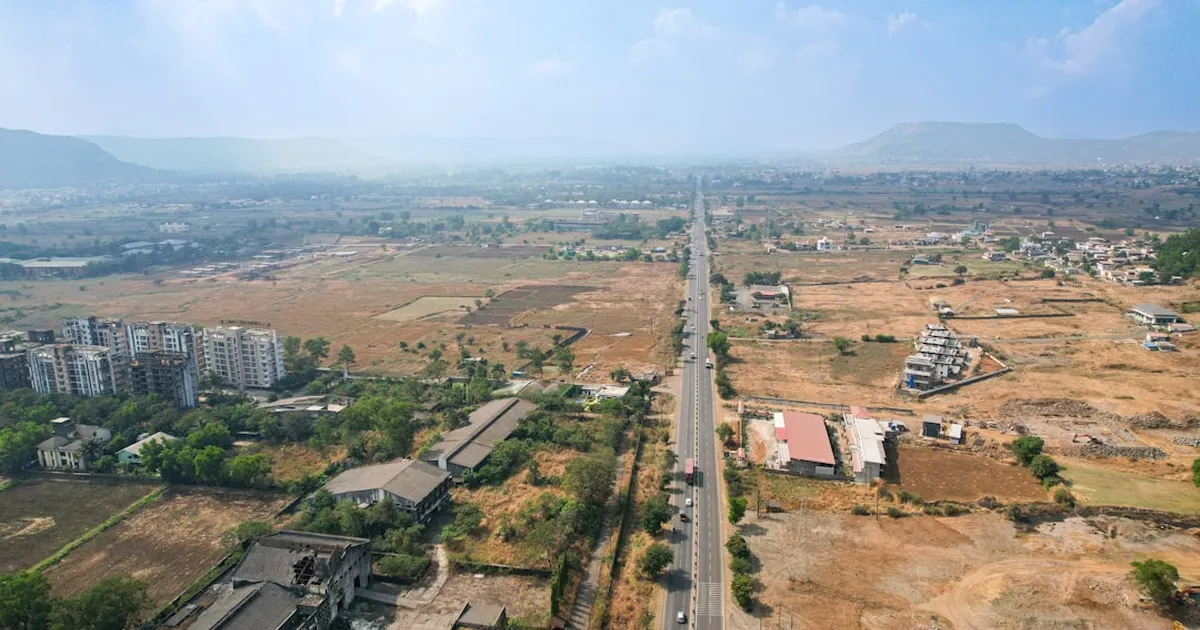
The Uttar Pradesh government has formally notified the Dadri-Noida-Ghaziabad Investment Region (DNGIR) Master Plan 2041, marking one of India's most ambitious urban expansion initiatives. The project will unfold across 209.11 square kilometers spanning 84 villages in Gautam Buddha Nagar and Bulandshahr districts, with development structured over four phases through 2041. The Noida Authority has already allocated ₹1,000 crore for land acquisition in Phase 1, and consent-based acquisition has commenced across 37 villages—24 in Bulandshahr and 13 in Gautam Buddha Nagar. This is not incremental growth: it's a systemic reimagining of the entire Delhi-NCR industrial corridor.
The Scale: 20,000+ Hectares, Six Sectors, 600,000 People
The DNGIR footprint spans approximately 20,000 hectares. To put that in perspective, existing Noida has already reached 95% saturation. This new city will accommodate around 600,000 residents and is designed as an industry-first development where 40% of land is reserved for manufacturing, logistics, and Special Economic Zones. Residential development accounts for 13% of the total land use, while 18% is dedicated to green and recreational spaces. The remaining land supports commercial zones, institutional areas, and transportation infrastructure.
Phase 1 (2024–2027) covers 3,165 hectares and targets key villages including Fazilpur, Dastampur, Dhudhera, Anandpur, and Chayansa. Phase 2 (2027–2032) adds 3,798 hectares. Phase 3 (2032–2037) expands by 5,908 hectares. By 2041, total land use reaches 8,230 hectares across all four phases.
Why This Matters for Homebuyers and Investors
The DNGIR notification fundamentally shifts capital allocation in the Delhi-NCR corridor. Unlike speculative township launches, this is government-backed infrastructure development with ₹1,000 crore in immediate land acquisition funding. For homebuyers, the timing is critical: Phase 1 villages will see rapid infrastructure deployment—roads, drainage, power, water networks—before residential projects launch. Historically, land prices in Phase 1 zones appreciate 18–24% annually in the first 2–3 years once connectivity improves. However, buyers should be realistic about timelines. Possession-ready homes are unlikely before 2027–2028 at the earliest. The project's industrial focus means residential will be secondary; expect mixed-income housing (EWS, LIG, MIG, HIG) rather than luxury-only development.
For industrial and logistics investors, this is a different story. The 40% industrial allocation, combined with proximity to the Delhi-Mumbai Industrial Corridor (DMIC), the Western Dedicated Freight Corridor, and Jewar Airport (20–30 minutes away), creates an exceptional logistics hub. Electronics manufacturing clusters, food processing zones, and agro-based industries are explicitly planned. Institutional capital is already moving: around 390 acres near Jewar Airport changed hands in 12 months for ₹2,340 crore.
Infrastructure Backbone: Metro, Freight Corridors, and Smart City Integration
The master plan integrates three critical infrastructure layers. First, a three-tier road network connects DNGIR to existing Noida, Greater Noida, Ghaziabad, and Dadri. Second, metro connectivity is planned—the Aqua Line extension from Sector 51 to Knowledge Park V is a priority for 2026. Third, the Western and Eastern Dedicated Freight Corridors bypass residential sectors, pushing heavy vehicle movement to non-peak hours. This is a genuine livability advantage over older, organically grown cities.
Smart city features include real-time traffic management, crowd monitoring systems, 24/7 water supply, underground electricity lines, and stormwater drainage. Solar and rainwater harvesting systems are embedded into the design. These aren't marketing claims—they're part of the notified master plan framework.
The Honest Challenges: Land Acquisition, Displacement, and Timeline Risk
The DNGIR project carries real execution risks. Land acquisition across 84 villages involves 20,000+ farmers and landowners. Consent-based acquisition is underway, but compulsory acquisition may follow if consent stalls. Displacement concerns are legitimate, particularly in villages like Anandpur, Phoolpur, and Khandera Girirajpur, where brick kilns currently operate. Environmental rehabilitation of these areas will take time and capital.
Timing risk is substantial. Phase 1 completion is targeted for 2027, but infrastructure-heavy projects in India frequently slip 12–24 months. Buyers banking on 2027 possession should plan for 2028–2029. The project's four-phase structure means some areas won't see meaningful development until 2032 or later. For investors seeking quick returns, this is a 5–7 year play at minimum.
Additionally, the master plan's industrial-first orientation means residential demand will be driven by workers in manufacturing and logistics, not white-collar IT jobs. This is fundamentally different from Noida's current profile and may limit appeal to certain buyer segments.
What to Expect Next: Timeline and Market Reactions
Immediate next steps: The Noida Authority will deploy three tehsildars (revenue officers) to accelerate consent-based land acquisition in Phase 1 villages. A temporary office is being established in New Noida. Land acquisition is expected to conclude by mid-2026 in Phase 1 areas. Infrastructure development (roads, utilities) will follow in 2026–2027. Industrial plot allotments to manufacturers and logistics firms will begin in 2027. Residential projects from major developers (Godrej, DLF, Lodha, M3M, and others) will likely launch in 2027–2028, once connectivity improves.
Market sentiment: The Jewar Airport's commercial operations began June 15, 2026, which has already triggered institutional buying in nearby areas. The DNGIR notification will accelerate this momentum, particularly in logistics and light industrial zones. Residential prices in Phase 1 villages will likely rise 15–20% in the next 12 months as connectivity news materializes.
Comparative Context: How DNGIR Stacks Against Other NCR Expansions
The DNGIR is larger and more industrially focused than Greater Noida (which emphasized residential). It's more government-backed than speculative township launches. The 40% industrial allocation mirrors Dubai's Jebel Ali model—a mixed-use city where jobs and housing are integrated. Unlike Gurugram, which grew organically around corporate parks, DNGIR is being planned from scratch with infrastructure-first sequencing. This reduces risk of inadequate roads and utilities but increases execution complexity.
Price comparison: Phase 1 villages currently trade at ₹40–60 lakhs per acre (raw land). Once connectivity improves and master plan clarity solidifies, expect ₹80–120 lakhs per acre by 2027. Residential apartments in Phase 1 zones will likely launch in the ₹45–75 lakh range for 2 BHK units (compared to ₹55–85 lakhs in existing Noida Sector 50–120), reflecting the longer development timeline and industrial proximity.
The Bottom Line: Who Should Invest, and Who Should Wait
Invest now if you are: A land investor with a 5–7 year horizon seeking capital appreciation. An industrial or logistics business operator looking for SEZ-grade infrastructure. An institutional investor (REIT, PE fund) betting on the Jewar Airport-DNGIR logistics nexus.
Wait if you are: A homebuyer seeking possession within 2–3 years. A buyer prioritizing IT corridor proximity or white-collar job markets. An investor uncomfortable with government-led, phased development timelines.
The DNGIR Master Plan 2041 is not a quick-flip opportunity. It's a generational infrastructure play. The government's ₹1,000 crore commitment and formal master plan notification reduce speculative risk. But execution risk, displacement issues, and timeline slippage are real. Buyers and investors should treat this as a long-term bet on North India's industrial and logistics future—not a short-term residential demand story.
Questions & Answers (0)
Terms & Conditions — Q&A
By submitting a question on RealtyPromoo, you agree to these terms:
1. Content Policy
- Your question must be a genuine real estate query.
- No abusive, defamatory, or promotional content.
- No personal contact info, broker referrals, or spam.
- Questions are reviewed by AI and may be edited for clarity, grammar, or politeness before publication.
2. Publication
- Your first name + last initial (e.g., "Rahul S.") will be displayed publicly with the answer.
- Your full name, phone number, and email are never displayed publicly.
- Once published, your question and answer become part of RealtyPromoo's content.
3. Phone & Email
- Your phone number is required so our team can share the answer with you on WhatsApp and assist with your query.
- Your phone number and email are stored securely and may be used by RealtyPromoo or its sales team to contact you regarding your query or related properties.
4. Answer Accuracy
- Answers are generated by AI based on publicly available information and the page context.
- Answers are informational only — not financial, legal, or investment advice.
- Always verify pricing, RERA status, and possession dates with the developer before any transaction.
- RealtyPromoo is not liable for decisions made based on AI-generated answers.
5. Pre-RERA / Pre-Launch Projects
- Some listed projects are pre-RERA / pre-launch. These listings are informational only.
- No booking, sale, or agreement is permitted before RERA registration.
- "Express Your Interest" forms collect contact details for future communication, not advance bookings.
6. Moderation
- RealtyPromoo reserves the right to delete, edit, or refuse to publish any question or answer.
7. Privacy
- Your data is handled per our Privacy Policy.
8. Jurisdiction
- These terms are governed by the laws of India.
- Disputes are subject to the courts of Noida, Uttar Pradesh.
Be the first to ask a question. Get an answer in seconds.
Questions & Answers
This article was drafted by Vikram Rao, Senior Property Analyst (Freelancer) with research support from artificial intelligence. AI assisted in gathering and summarizing information from primary news sources and official statements, and the final content was reviewed by our editor before publishing. News pages are timestamped at the time of writing and are not updated after publication.
Sources consulted: Primary press releases & company statements · Tier-1 business news (Economic Times, Livemint, Moneycontrol, Business Standard) · BSE / NSE corporate disclosures · Government notifications · State RERA filings (where relevant).
Published: 1 June 2026 · Spot an error? Let us know
Projects mentioned in this article
 Under Construction
Max Estates 128
by Max Estates Limited
Sector 128, Noida Expressway, Noida
₹9.28 Cr - ₹18.04 Cr
4 BHK, 5 BHK, Penthouse
 New Launch / Under Construction
M3m Jacob & Co Residences
by M3M India
Sector 97, Noida Expressway, Noida
₹6.14 Cr - ₹20.77 Cr
3 BHK, 4 BHK, 5 BHK
 New Launch/Under Construction
LNT Green Reserve
by L&T Realty (Larsen & Toubro)
Sector 128, Noida Expressway, Noida
₹6 Cr - ₹12 Cr
3 BHK, 4 BHK, 5 BHK
 Under Construction
Raheja Amaltis
by K Raheja Corp Homes (k Raheja Corp Real Estate Private Limited)
Sion West, Central Mumbai, Mumbai
₹6.03 Cr – ₹11 Cr
3 BHK, 3.5 BHK, 4 BHK
Related News
 News
News
Faridabad–Jewar Expressway 32-Km Spur To Connect NCR With Yamuna Expressway Corridor Boosting Real Estate In Faridabad And Greater Noida
Government approves ₹3,630 crore 32-km Faridabad-Jewar Expressway with 11-km elevated section. Jewar Airport connectivity in 20 minutes. Real estate impact...
 News
News
Up-RERA Approves Over 400 New Real Estate Projects In 2026 As Project Registrations Surge Beyond Noida And Lucknow Into Tier-2 And Tier-3 Cities Amid Jewar Airport And Expressway Growth
UP-RERA expects 400+ project approvals in 2026 vs 308 in 2025, driven by Jewar Airport, Ganga Expressway, and Tier-2 city growth across Uttar Pradesh real...
 News
News
Real Estate Analysts Name Lodha DLF And Sobha As Top Stock Picks For Fy27 As India Residential Sector Enters More Selective Growth Phase
Emkay, Nomura back Lodha, DLF, Sobha as top FY27 stock picks as India real estate enters mature growth phase. Analyst outlook on selective consolidation and...
 News
News
Gulshan Group Partners With IHCL To Invest ₹1,000 Crore In Taj Hotel And Taj Branded Residences On Noida Expressway Sector 129
Gulshan Group partners with IHCL to develop ₹1,000 crore Taj Hotel & branded residences in Noida Sector 129. 57-floor mixed-use tower with 150-room hotel &...