
Iran War Pushes Bengaluru Property Prices — Rates Set To Rise 10–20%, Right Time To Invest Now

Geopolitical Tensions Push Bengaluru Construction Costs Higher — Price Rises of 10–20% Now Expected
The Iran-Israel conflict is reshaping Bengaluru's property market in ways that go far beyond headlines. While sales dipped 5% in Q1 2026 as buyer sentiment turned cautious, the real story is unfolding on the supply side — and it favours those who understand what's actually happening. Construction costs are climbing, developer pricing is adjusting upward, and the window for entry before these corrections solidify is narrowing. For a city like Bengaluru, where the IT corridor has always been the growth engine, this moment demands clarity.
The mechanism is straightforward but often misunderstood. India imports the majority of its crude oil through the Strait of Hormuz, which Iran now controls. Geopolitical tensions there have pushed global oil prices higher, and when crude rises, so does everything that builds a house — cement, steel, transportation, labour. Industry experts, including Niranjan Hiranandani of Hiranandani Group, have flagged that if the conflict extends, property prices across India could rise by 10–12% within three to five months. Some analysts predict the upside could reach 15–20% depending on how long supply chain pressures persist. Bengaluru's tech-driven market, with its high-income buyer base and premium project pipeline, sits squarely in the path of this cost inflation.
Impact on Homebuyers — The Time Window Matters
For buyers in Bengaluru's central and west zones — Indiranagar, Koramangala, Malleswaram, Jayanagar, and HSR Layout — the message is mixed but actionable. Ready-to-move properties and near-completion projects offer the most price protection right now. These units were priced before crude spiked, so their asking rates haven't yet absorbed the full cost pressure that will hit new launches by Q3 2026. If you've been sitting on the fence in Indiranagar's heritage pockets or eyeing a 3 BHK in Koramangala, the calculus has shifted. Waiting for "certainty" in the geopolitical situation may mean paying 10–15% more in three to four months.
The broader market data tells a nuanced story. Bengaluru sold 16,440 units in Q1 2026, down 5% from the prior quarter, but new launches rose 7% — developers are not retreating; they're repricing. Properties in the ₹1.5–2.5 crore range (the largest new-supply segment at 32%) will feel the cost pressure most acutely. Mid-range properties (₹80 lakh–₹1.5 crore) remain resilient because they serve Bengaluru's core IT professional demographic, whose employment security and salary growth tend to buffer them against short-term price spikes. Affordability housing (below ₹40 lakh) continues to decline as a share of supply — a longer-term concern, but not the immediate trigger for action.
Expert Analysis — Why This Moment Is Different
Bengaluru has weathered geopolitical shocks before. During the Russia-Ukraine conflict in 2022, construction costs rose, but residential demand held firm. The pattern repeating now is similar but with a critical difference: Bengaluru's property market has already appreciated 63% over the last three to four years in prime IT corridors, reaching ₹15,000–₹18,000 per sq ft. The city ranked 4th globally for prime housing appreciation in 2025. That momentum is real, but it's also created a price base that's now vulnerable to cost inflation. When developers absorb higher material and labour costs, they pass them forward — and buyers pay. The RBI, which cut rates by 125 basis points through 2025, is now on pause and watching inflation pressures from oil. If crude stays elevated, the central bank faces pressure to hold or even reverse cuts, making home loans less affordable just as prices rise.
The demand side, however, remains strong. NRIs from the Middle East, particularly those in the UAE, Qatar, and Saudi Arabia, are repatriating savings into Indian real estate due to regional uncertainty. For them, Bengaluru is the natural choice — it's where the jobs are, where the infrastructure is, where the IT ecosystem is anchored. The rupee has also weakened against the dollar, making Indian property cheaper in foreign currency terms. A flat priced at ₹1 crore in Indiranagar today effectively costs less to a Dubai-based NRI than it did two years ago. That's a powerful incentive that's already showing up in broker enquiry data.
What to Expect Next
By Q2 2026, expect new launch prices in Bengaluru to reflect 5–10% upward revisions as construction cost inflation filters through. Ready-to-move inventory will tighten as smart buyers lock in pre-revision pricing. Resale markets in heritage neighbourhoods like Malleswaram and Indiranagar will see increased activity from investors who understand that existing stock offers better value than new launches in an inflationary environment. Metro-linked properties — particularly along the Whitefield extension, Rajajinagar, Jayanagar, Electronic City, and Bommanahalli corridors where housing demand is already up 8–19% — will continue to command premiums. By mid-2026, if oil prices stabilize, the urgency will ease. If they don't, the price corrections will have already locked in.
Related Projects & Areas Affected
- Whitefield & IT Corridor: Premium IT cluster seeing 7–12% appreciation near metro stations; new launches already repricing upward.
- Indiranagar & Koramangala: Heritage-backed premium neighbourhoods where ready-to-move stock offers best value before new launches reset pricing.
- Malleswaram & Jayanagar: Central Bengaluru's established residential zones with strong NRI interest and limited new supply; resale market likely to see volume uptick.
- HSR Layout & Sarjapur Road: Mid-premium segments attracting both end-users and investors; metro-adjacent properties commanding 10–20% premiums over non-metro areas.
- North Bangalore (Hebbal, Thanisandra, Yelahanka): Emerging growth corridor with airport connectivity; peripheral areas showing strong pre-appreciation buying ahead of infrastructure completion.
Key Takeaways for Bengaluru Buyers
This is not a market crash scenario. It's a cost-push inflation scenario where the window for entry at current prices is real but finite. In Bengaluru's central and west zones, where heritage meets modern infrastructure, the fundamentals remain sound — IT employment is stable, metro connectivity is expanding, and NRI demand is rising. The risk is not to the long-term value of property; it's to the timing of your purchase. If you're planning to buy in the next 12 months, the calculus favours acting sooner rather than waiting. Ready-to-move properties and near-completion projects in established neighbourhoods offer the best protection against cost-driven price revisions. For investors with a 5–10 year horizon, Bengaluru's property market continues to offer 10–15% annual appreciation potential, especially in metro-linked corridors and IT-adjacent zones where employment growth and infrastructure upgrades are tangible, not speculative.
Questions & Answers (1)
Terms & Conditions — Q&A
By submitting a question on RealtyPromoo, you agree to these terms:
1. Content Policy
- Your question must be a genuine real estate query.
- No abusive, defamatory, or promotional content.
- No personal contact info, broker referrals, or spam.
- Questions are reviewed by AI and may be edited for clarity, grammar, or politeness before publication.
2. Publication
- Your first name + last initial (e.g., "Rahul S.") will be displayed publicly with the answer.
- Your full name, phone number, and email are never displayed publicly.
- Once published, your question and answer become part of RealtyPromoo's content.
3. Phone & Email
- Your phone number is required so our team can share the answer with you on WhatsApp and assist with your query.
- Your phone number and email are stored securely and may be used by RealtyPromoo or its sales team to contact you regarding your query or related properties.
4. Answer Accuracy
- Answers are generated by AI based on publicly available information and the page context.
- Answers are informational only — not financial, legal, or investment advice.
- Always verify pricing, RERA status, and possession dates with the developer before any transaction.
- RealtyPromoo is not liable for decisions made based on AI-generated answers.
5. Pre-RERA / Pre-Launch Projects
- Some listed projects are pre-RERA / pre-launch. These listings are informational only.
- No booking, sale, or agreement is permitted before RERA registration.
- "Express Your Interest" forms collect contact details for future communication, not advance bookings.
6. Moderation
- RealtyPromoo reserves the right to delete, edit, or refuse to publish any question or answer.
7. Privacy
- Your data is handled per our Privacy Policy.
8. Jurisdiction
- These terms are governed by the laws of India.
- Disputes are subject to the courts of Noida, Uttar Pradesh.
-
Q. Should I buy right now or wait a little? I really wanted to invest this year.A.
This is one of the most common dilemmas for property investors, and honestly, there is no single right answer — it depends on your financial readiness and goals.
That said, a few things are worth considering:
- If geopolitical pressures do push construction costs higher, waiting could mean paying more later — the article's 10–20% projection reflects this concern.
- However, buying under pressure is never wise. Ensure your finances are in order, loan eligibility is confirmed, and the project has clear RERA approvals.
- Bengaluru's long-term fundamentals — IT sector demand, infrastructure growth — remain strong regardless of short-term global events.
If you have identified a specific project and your budget is ready, it is generally better to act than to time the market. Use the Express Your Interest form for current verified pricing and availability.
Questions & Answers
This article was drafted by Aarav Mehta, Senior Property Analyst (Freelancer) with research support from artificial intelligence. AI assisted in gathering and summarizing information from primary news sources and official statements, and the final content was reviewed by our editor before publishing. News pages are timestamped at the time of writing and are not updated after publication.
Sources consulted: Primary press releases & company statements · Tier-1 business news (Economic Times, Livemint, Moneycontrol, Business Standard) · BSE / NSE corporate disclosures · Government notifications · State RERA filings (where relevant).
Published: 31 May 2026 · Spot an error? Let us know
Projects mentioned in this article
 Under Construction
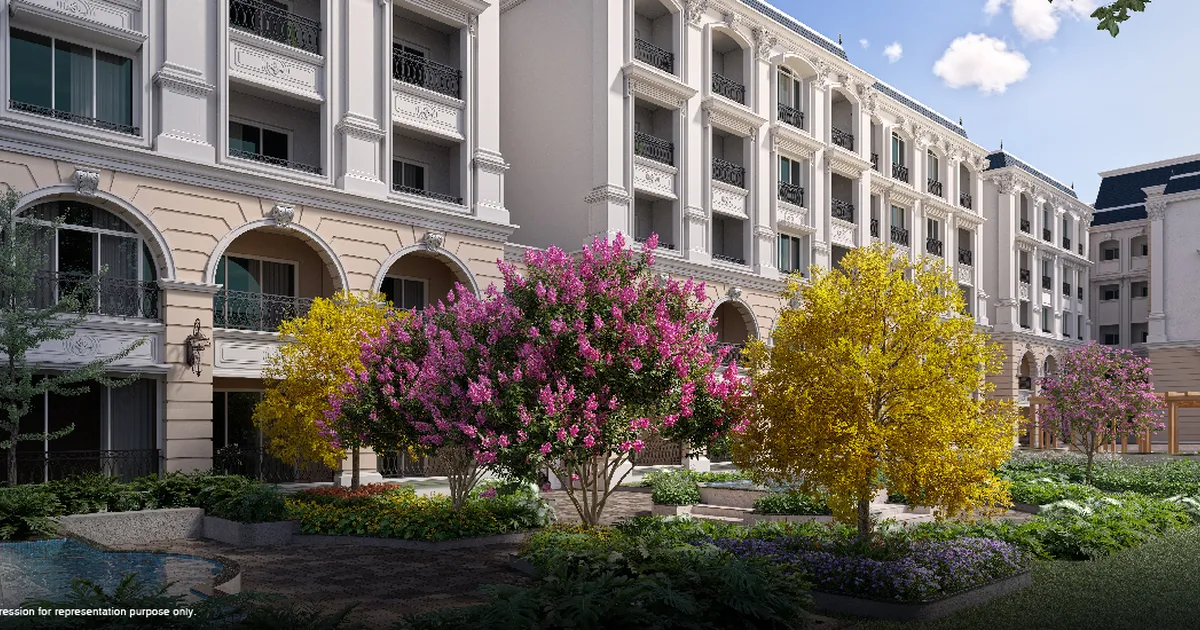
Godrej Athena Indiranagar Bengaluru
by Godrej Properties Limited
Indiranagar (jagadish Nagar, Off Old Airport Road), Bangalore
₹3.49 Cr - ₹4.2 Cr
2 BHK, 3 BHK, 3.5 BHK
 Under Construction
Assetz Zen And Sato Kanakapura Road Bengaluru
by Assetz Property Group
Kanakapura Road, Bangalore
₹85 Lakh - ₹1.85 Cr
1 BHK, 2 BHK, 3 BHK
 Under Construction
Assetz Sora And Saki Phase 3 KIADB Aerospace Park Bengaluru
by Assetz Property Group
Phase 1 RERA registered March 2024 · Phase 3 RERA registered March 2024 · All phases under construction · Possession April 2029
KIADB Aerospace Park, Bagalur, Bangalore
₹1.85 Cr - ₹2.80 Cr
3 BHK, 4 BHK
 Under Construction
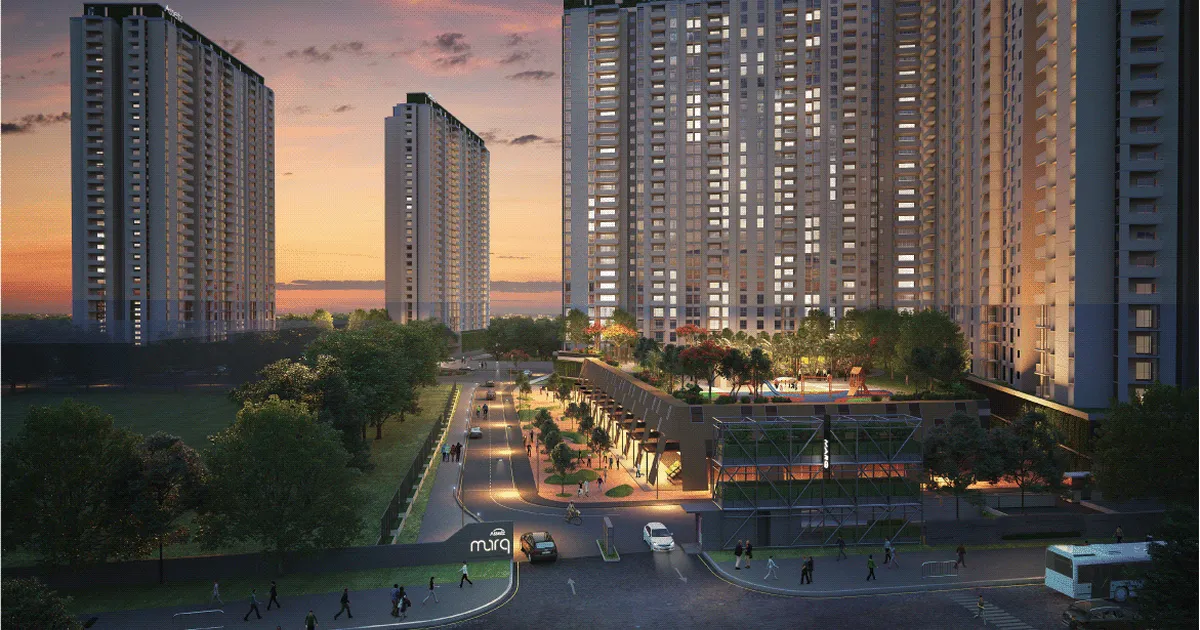
Assetz Marq Whitefield Bengaluru
by Assetz Property Group
Phase 1 & 2 ready · Phase 3A near completion (Feb 2026 target) · Phase 3B under construction (Jul 2027)
Whitefield, Bangalore
₹1.65 Cr - ₹3.50 Cr
3 BHK, 4 BHK
Related News
 News
News
Brigade Group Eyes ₹1,100 Crore From New Luxury Residential Launch In East Bengaluru Old Madras Road Corridor In 2026
Brigade Belvedere: 10.75-acre luxury residential launch in East Bengaluru with ₹1,100 crore revenue potential. 773 units in Phase 1, RERA registered...
 News
News
Bengaluru HSR Layout Double-Decker Flyover Nears Completion Unlocking South Bengaluru Connectivity And Boosting Property Demand On Sarjapur Road And Electronic City Corridor
Bengaluru's ₹449 Cr Silk Board double-decker flyover fully operational April 2026. Connects HSR Layout, Sarjapur Road, Electronic City. Property demand &...
 News
News
Bengaluru Airport Suburban Rail Link Gets ₹4,100 Crore Railways Approval With Confirmed Station At KIADB Aerospace Park Boosting North Bengaluru Property Demand
Indian Railways approves ₹4,100 crore Bengaluru airport suburban rail with confirmed KIADB Aerospace Park station. 2030 completion. North Bengaluru property...
 News
News
Bengaluru Namma Metro Phase 3 Hebbal To Kempegowda International Airport Corridor Drives 30% Property Price Surge In North Bengaluru Residential Belt
Union Cabinet approves ₹15,611 crore Namma Metro Phase 3: 44.65 km, 31 stations. Hebbal, JP Nagar, Kempapura property prices to surge 30%+. 2029 completion...