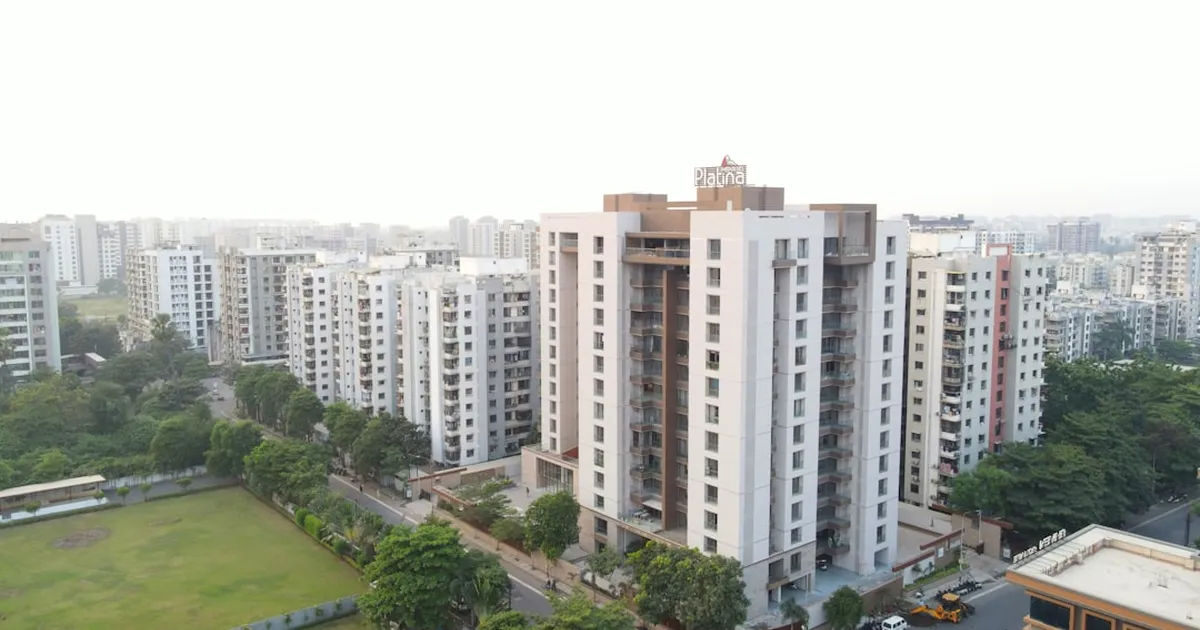
Fy27 Outlook For Indian Residential Real Estate: High Base Effect And Affordability Challenges As Tier-i Mid-premium Segment Shows Resilience

FY27 Residential Real Estate Outlook: Moderation Ahead as Tier-I Premium Segment Holds Strong
India Ratings and Research (Ind-Ra) has issued a neutral outlook for the residential real estate sector in FY27, signaling a shift from the high-growth phase of FY23–FY25. The rating agency expects year-on-year sales growth to reach 5–7 percent in FY27, with value growth outpacing volume growth. The forecast reflects a sector entering a consolidation phase after strong post-pandemic expansion, driven by a combination of high base effects from prior years and mounting affordability pressures that are reshaping buyer behavior across Indian cities.
The outlook was announced in late February 2026 and represents a measured reassessment of market dynamics. While premium and luxury segments are expected to remain resilient, the affordable and mid-market housing segments face headwinds from elevated property prices that have outpaced income growth in most major metros. This divergence—where luxury properties attract strong demand while mid-range homes struggle—is reshaping developer strategies and creating distinct opportunities and challenges for different buyer cohorts.
The High Base Effect and Affordability Squeeze
The residential sector experienced exceptional growth between FY23 and FY25, with post-pandemic aggregate housing prices in the top eight metros surging at a 9 percent compound annual growth rate (CAGR). By end-September 2025, price appreciation had accelerated to 12 percent year-on-year. This strong baseline makes it mathematically difficult for FY27 to sustain similar growth rates, even if underlying demand remains healthy. Analysts describe this as the "high base effect"—a natural deceleration following exceptional performance.
More concerning for many buyers is the affordability challenge. Property prices have climbed faster than household income levels across major cities including Hyderabad, the Mumbai Metropolitan Region (MMR), and the National Capital Region (NCR). In cities like Pune, Chennai, and Kolkata, where five-year price growth exceeded 12 percent, the purchasing power of middle-income families has compressed significantly. The EMI-to-income ratio—a key affordability metric—had risen consistently between 2021 and 2024 due to interest rate hikes and capital value growth outpacing wage increases.
However, a silver lining is emerging. Reserve Bank of India rate cuts totaling 125 basis points in 2025 and projected household income growth of 8–10 percent in 2026 are expected to stabilize affordability by 2026–2028. Higher income tax slabs announced in recent budgets are also supporting consumer savings and discretionary spending capacity.
Tier-I Premium Segment Shows Resilience; Mid-Market Struggles
The most striking trend in FY26 and expected to continue into FY27 is the divergence between premium and affordable housing segments. Homes priced above ₹1 crore now account for nearly half of total residential sales in major cities—a dramatic shift from just 11 percent share in 2021. The ₹1–5 crore segment has emerged as the new "sweet spot," with strong demand from affluent domestic buyers and non-resident Indians.
In contrast, the affordable segment—particularly homes below ₹50 lakh—has seen consistent declines in both demand and new launches. Developers, facing margin pressures in affordable housing due to rising input costs, have deliberately shifted supply toward premium and luxury offerings. This strategy reflects rational market behavior but exacerbates affordability challenges for first-time buyers and middle-income families.
City-wise performance varies significantly. Bengaluru, Ahmedabad, and MMR posted the highest sales growth of 15–17 percent year-on-year during the trailing twelve months to H1 FY26. Hyderabad achieved strong growth with a 17+ percent CAGR during FY20–FY25. Conversely, Pune, Chennai, and Hyderabad posted negative to 5 percent year-on-year growth in recent periods, indicating market saturation or affordability constraints in these metros.
IT-dependent cities face an additional headwind: slower net headcount additions across major information technology services firms and workforce consolidation driven by artificial intelligence and automation are elongating decision cycles for mid-market buyers, even as end-user intent remains healthy.
Market Outlook: Value-Led Growth with Selective Opportunities
The sector is transitioning from rapid volume expansion to measured, value-led growth. While overall sales volumes are expected to remain modest, the continued strength of premium segments and stabilizing affordability metrics point to a market entering a sustainable equilibrium rather than facing a sharp contraction.
For homebuyers, the FY27 outlook suggests several key considerations: First-time and mid-income buyers should monitor interest rate trends and government policy announcements, as affordability improvements are expected by late 2026. Premium segment buyers face longer decision cycles but benefit from strong underlying demand and lifestyle-driven differentiation in developments. Investors should focus on premium and luxury projects in high-growth cities like Bengaluru and Hyderabad, where demand fundamentals remain robust.
Developers are responding by emphasizing quality, design, and experiential living over aggressive volume growth. Low-density townships, wellness-integrated amenities, and proximity to employment hubs are becoming key differentiators. This shift benefits buyers seeking long-term value but narrows options for budget-conscious purchasers in the near term.
Policy Support and Structural Tailwinds
Several structural factors support a recovery in FY27 and beyond. India's median population age of around 30 years and ongoing urbanization continue to drive housing demand. Infrastructure investments—including metro extensions, expressway corridors, and greenfield airports—are expanding residential catchment areas in suburban and peripheral localities. Redevelopment initiatives in cities like Mumbai, Delhi-NCR, Bengaluru, and Chennai are reshaping urban housing stock, supported by favorable Floor Space Index policies and Transferable Development Rights frameworks.
GST rationalization on construction materials and potential tax incentives for affordable housing (if announced in the budget) could ease input cost pressures for developers and improve affordability. However, sustained government focus on affordable housing remains critical, as industry bodies CREDAI and NAREDCO are advocating for a revision in the affordable housing price cap from ₹45 lakh to ₹90 lakh to better align with current market realities.
What to Expect in FY27
Sales growth is likely to be sector-specific and driven by local economic fundamentals rather than broad market enthusiasm. Premium residential projects in high-growth cities should see continued strong absorption. Mid-market projects may experience longer sales cycles and softer pricing unless affordability improves. Affordable housing will likely remain under pressure unless government support measures materialize. Interest rate movements, employment trends in IT hubs, and policy announcements will be key catalysts for market direction.
Key Takeaways for Buyers and Investors
- FY27 sales growth expected at 5–7% YoY, with value growth outpacing volume growth
- Premium and luxury segments remain resilient; mid-market faces affordability pressures
- Homes above ₹1 crore now represent nearly 50% of sales; affordable segment shrinking
- Affordability metrics expected to stabilize by 2026–2028 as income growth outpaces price appreciation
- Bengaluru, Hyderabad, and NCR emerging as growth leaders; Pune and Chennai showing moderation
- Lower home loan rates (7–7.5% range) and RBI rate cuts supporting demand recovery
- Infrastructure investments and redevelopment projects expanding residential catchment areas
Questions & Answers (0)
Terms & Conditions — Q&A
By submitting a question on RealtyPromoo, you agree to these terms:
1. Content Policy
- Your question must be a genuine real estate query.
- No abusive, defamatory, or promotional content.
- No personal contact info, broker referrals, or spam.
- Questions are reviewed by AI and may be edited for clarity, grammar, or politeness before publication.
2. Publication
- Your first name + last initial (e.g., "Rahul S.") will be displayed publicly with the answer.
- Your full name, phone number, and email are never displayed publicly.
- Once published, your question and answer become part of RealtyPromoo's content.
3. Phone & Email
- Your phone number is required so our team can share the answer with you on WhatsApp and assist with your query.
- Your phone number and email are stored securely and may be used by RealtyPromoo or its sales team to contact you regarding your query or related properties.
4. Answer Accuracy
- Answers are generated by AI based on publicly available information and the page context.
- Answers are informational only — not financial, legal, or investment advice.
- Always verify pricing, RERA status, and possession dates with the developer before any transaction.
- RealtyPromoo is not liable for decisions made based on AI-generated answers.
5. Pre-RERA / Pre-Launch Projects
- Some listed projects are pre-RERA / pre-launch. These listings are informational only.
- No booking, sale, or agreement is permitted before RERA registration.
- "Express Your Interest" forms collect contact details for future communication, not advance bookings.
6. Moderation
- RealtyPromoo reserves the right to delete, edit, or refuse to publish any question or answer.
7. Privacy
- Your data is handled per our Privacy Policy.
8. Jurisdiction
- These terms are governed by the laws of India.
- Disputes are subject to the courts of Noida, Uttar Pradesh.
Be the first to ask a question. Get an answer in seconds.
Questions & Answers
This article was drafted by Arjun Subramanian, Senior Property Analyst (Freelancer) with research support from artificial intelligence. AI assisted in gathering and summarizing information from primary news sources and official statements, and the final content was reviewed by our editor before publishing. News pages are timestamped at the time of writing and are not updated after publication.
Sources consulted: Primary press releases & company statements · Tier-1 business news (Economic Times, Livemint, Moneycontrol, Business Standard) · BSE / NSE corporate disclosures · Government notifications · State RERA filings (where relevant).
Published: 25 May 2026 · Spot an error? Let us know
Projects mentioned in this article
 Under Construction
Raheja Amaltis
by K Raheja Corp Homes (k Raheja Corp Real Estate Private Limited)
Sion West, Central Mumbai, Mumbai
₹6.03 Cr – ₹11 Cr
3 BHK, 3.5 BHK, 4 BHK
 Under Construction
Century Liva
by Century Real Estate Holdings Pvt. Ltd.
Yelahanka, Bangalore
₹1.59 Cr – ₹6.30 Cr
3 BHK, 4 BHK, Penthouse
 Pre-Launch
Century Midtown
by Century Real Estate Holdings Pvt. Ltd.
Devanahalli, Bangalore
₹82 Lakhs – ₹1.93 Cr (Apartments) | ₹98 Lakhs onwards (Plots)
1 BHK, 2 BHK, 3 BHK Apartments + Residential Plots
 New Launch
Shapoorji Pallonji The Dualis
by Shapoorji Pallonji Real Estate (joyville Shapoorji Housing Pvt. Ltd.)
Sector 46, Gurugram
₹6.84 Cr - ₹9.50 Cr
3 BHK + Servant, 4 BHK + Servant
Related News
 News
News
JLL India Report: Institutional Real Estate Investments In India Set To Fall 37 Percent To USD 3.06 Billion In H1 2026 Amid Global Economic Uncertainties
JLL forecasts institutional real estate investments in India will decline 37% to USD 3.06 billion in H1 2026 amid global economic uncertainties. What this...
 News
News
India's Listed Real Estate Developers Reduce Home-Market Dependence As Geographic Diversification Accelerates In Fy26 With Godrej Prestige Sobha And Lodha Expanding Across Seven Cities
India's top 11 listed developers hit ₹1.48L crore pre-sales in FY26 by diversifying beyond home markets. Godrej, Prestige, Lodha expand across MMR, NCR...
 News
News
Up-RERA Approves Over 400 New Real Estate Projects In 2026 As Project Registrations Surge Beyond Noida And Lucknow Into Tier-2 And Tier-3 Cities Amid Jewar Airport And Expressway Growth
UP-RERA expects 400+ project approvals in 2026 vs 308 in 2025, driven by Jewar Airport, Ganga Expressway, and Tier-2 city growth across Uttar Pradesh real...
 News
News
Maharashtra Government Advances Mumbai Water Metro Project To Expand Urban Water Transport Network Across Mumbai Metropolitan Region Impacting Waterfront And Harbour-Adjacent Real Estate
Maharashtra advances Water Metro project with 45 terminals across MMR by 2036. Impact on Worli, Bandra, Versova, Navi Mumbai real estate prices and waterfront...