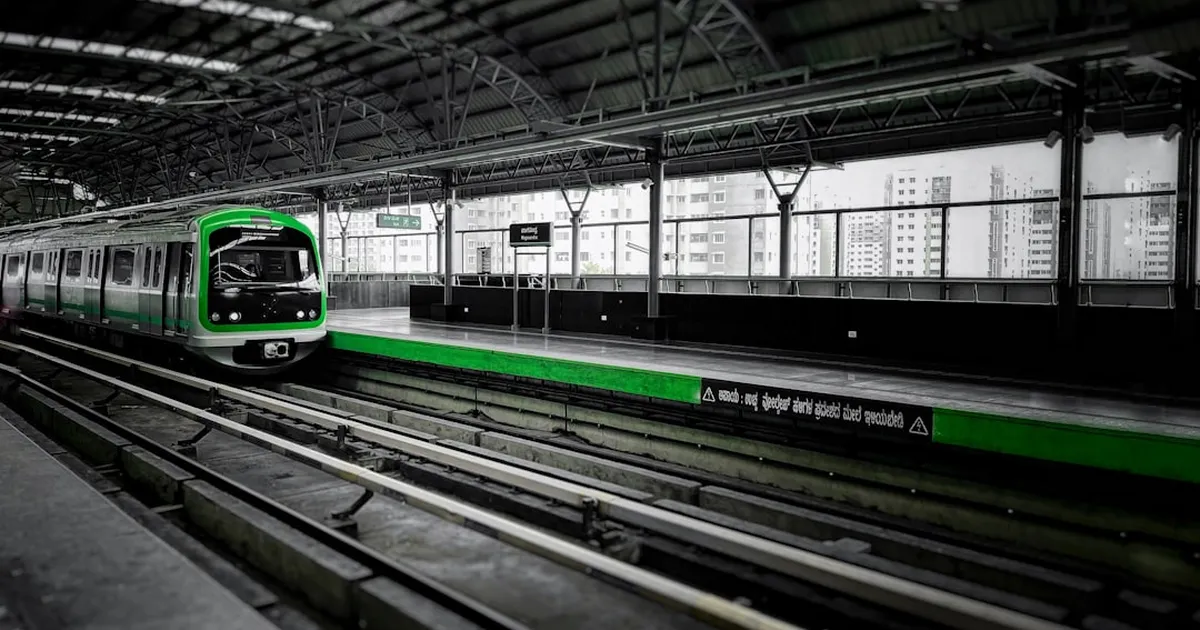
Bengaluru Namma Metro Phase 3 Hebbal To Kempegowda International Airport Corridor Drives 30% Property Price Surge In North Bengaluru Residential Belt

Metro Phase 3 Approval Unlocks 30% North Bengaluru Property Price Surge—Hebbal, JP Nagar Lead
The Union Cabinet's approval of Namma Metro Phase 3 on 16 August 2024 has catalyzed a wave of property price appreciation across North Bengaluru. The project—two elevated corridors spanning 44.65 km with 31 stations, estimated at ₹156.11 billion—will directly link southern and western Bengaluru to Kempegowda International Airport via Hebbal. Real estate experts project property prices in select localities will surge by over 30%, with construction targeted to commence in late 2025 and completion by the early 2030s. The first operational corridor, the Orange Line (JP Nagar 4th Phase to Kempapura), is scheduled for 2029. Already, the announcement alone has triggered a 10% price uptick, with developers expected to raise rates for metro-adjacent projects within one to three months of the approval.
Why North Bengaluru Just Became the Tech Corridor's Next Growth Engine
The timing of Phase 3 aligns perfectly with how the IT economy is reshaping Bengaluru's geography. Hebbal—sandwiched between Manyata Tech Park and the airport—has already seen 32% price appreciation. JP Nagar, closer to the city center and anchored by Secondary Business District demand, is projected to capture the highest residential gains at 30–35%. Kempapura and the ORR corridor, home to dozens of Global Capability Centres and IT delivery hubs, are remaking themselves from traffic-choked industrial zones into premium residential and commercial destinations. The metro directly addresses the commute pain that has constrained these areas for years. For tech professionals earning ₹15–30 lakh annually, a 45-minute metro commute beats a 90-minute car crawl. That shift in livability translates directly into demand, and demand into price.
Areas like Peenya, Sumanahalli, and Hosahalli in West Bengaluru still offer relatively affordable land—a rare advantage for developers seeking mid-range inventory near metro access. Analysts expect these zones to absorb significant mid-tier residential launches by 2027–2028.
The Real Numbers: Who Buys, When, and at What Price
Manoj Agarwal, Founder of Agarwal Estates, projects an immediate 10% price increase following announcement, with an additional 20% rise expected in the medium term. Bhavesh Kothari, Founder and CEO of Property First Realty, notes that investors are already purchasing properties in anticipation of metro completion—driving prices upward even before construction breaks ground. This speculative buying is textbook metro-corridor behavior in Bengaluru, proven by Whitefield's 20% jump after the Purple Line extension and Madavara's 133% appreciation over seven years (₹4,500 to ₹10,500 per sq ft) following the Nagasandra–Madavara extension.
Properties within 500–800 meters of Phase 3 stations already command a 5–10% premium. Transit-Oriented Development (TOD) zones—mixed-use developments combining housing, retail, and offices within 500–800 meters of stations—will receive higher Floor Area Ratio (FAR) incentives, encouraging dense development. These zones typically command 10–15% premiums over comparable single-use properties.
Current Pricing in Affected Corridors (2026)
- Hebbal: ₹12,500–₹16,000 per sq ft (mature, premium micro-market; 126% appreciation over five years)
- JP Nagar: ₹10,500–₹13,500 per sq ft (Secondary Business District proximity)
- Kempapura / Outer Ring Road: ₹9,500–₹12,500 per sq ft (emerging commercial hub)
- Yelahanka: ₹8,500–₹11,000 per sq ft (Blue Line extension, mid-2026 operational target)
- Prime IT Corridors (across Bengaluru): ₹15,000–₹18,000 per sq ft (baseline for comparison)
How the Metro Actually Changes Commute Economics
The ORR corridor currently stretches from Hebbal southward, hosting GCCs and IT delivery centers. During peak hours, surface traffic crawls. The metro eliminates this bottleneck. Commute times in peripheral suburbs connected by Phase 2 have already dropped 15–40%. For Hebbal residents commuting to Electronic City or Sarjapur, the metro cuts travel time from 90 minutes to 35–40 minutes. That quality-of-life upgrade is what drives rental demand, occupancy rates, and ultimately capital appreciation.
North Bengaluru accounted for nearly 34% of all residential launches in 2025, according to Cushman & Wakefield's Q4 2025 Residential Market Beat report. Developers are voting with their capital. They see the metro as a market-maker, not a nice-to-have.
Infrastructure Timelines: Don't Bet on Early Completion
The Orange Line targets 2029 operational status. Phase 3A (Hebbal–Sarjapur Red Line, 36.59 km) is now likely delayed to 2031 or beyond due to its mixed elevated and underground design. Construction on the Orange Line is expected to begin in late 2025, with geotechnical investigations already underway on Magadi Road (Kadabagere and Hosahalli stations). Bengaluru metro projects have historically faced 6–12 month delays. Factor these buffers into your investment timeline. If you're buying in Hebbal or JP Nagar in 2026, model metro benefits arriving in 2029–2030, not 2028.
The Risks You Need to Hear
Hebbal's price—₹12,500–₹16,000 per sq ft—is no longer a value play. The easy money was made between 2019 and 2023. New buyers are paying for anticipated infrastructure gains. If metro delays extend significantly beyond 2029, near-term appreciation will moderate. Traffic congestion on the Hebbal flyover remains severe during peak hours. While the Karnataka Cabinet has approved an 18-km twin-tube underground tunnel road connecting Hebbal to Silk Board (₹12,690 crore project cost), this won't operationalize before 2029–2030. Until then, surface congestion persists.
Property tax hikes are another headwind. BDA layout residents have faced steep property tax increases ranging from 9% to 51%, affecting over 1.2 lakh residents. Home prices and rental costs in India are rising faster than consumer inflation, creating affordability pressure on first-time buyers. Don't assume the metro premium alone will offset rising construction and compliance costs.
Where to Watch: The Micro-Markets Shaping Up
Hebbal (Blue Line + Orange Line Interchange Node): The most significant multi-line interchange in the city. The Blue Line provides direct airport access; the Orange Line connects to JP Nagar and Kempapura. Premium residential and commercial development will cluster here. Expect ₹12,500–₹16,000 per sq ft to stabilize or appreciate modestly (5–8% annually) as metro approaches. Best for 5–7 year hold horizons.
JP Nagar (Orange Line, South Bengaluru anchor): Closest to city center among Phase 3 stations. Analysts project 30–35% appreciation. However, land availability is already constrained. Developers are moving fast; if you're waiting for prices to moderate, you'll miss the window.
Kempapura & ORR Corridor (Orange Line, tech hub spine): Home to dozens of GCCs and IT delivery centers. Pricing at ₹9,500–₹12,500 per sq ft offers better value than Hebbal. Expect 25–30% appreciation over 5 years. Rental yields are strong due to tech workforce demand.
Yelahanka (Blue Line, North Bengaluru residential belt): Slated for mid-2026 operational status. At ₹8,500–₹11,000 per sq ft, it offers the best entry price for North Bengaluru metro access. Pre-appreciation buying is already active. If you're budget-conscious and willing to wait for metro completion, Yelahanka beats Hebbal on value.
Sarjapur Road (Phase 3A Red Line, delayed to 2031+): Prices have already risen 22% (2021–2023) on Phase 3A planning announcements alone. Further appreciation is priced in. Wait-and-see is risky; the easy money is already made.
What This Means for Your Purchase Decision
If you're buying in 2026 along Phase 3 corridors, you're buying for a 5–7 year hold minimum. The metro will be a tailwind if you can absorb the current entry price and wait for 2029–2030 completion. Underwrite properties at corridor baseline appreciation (8–12% annually for North Bengaluru); treat the metro as upside, not base case. If a project's price only works with full metro premium realized, you're overpaying for an outcome that hasn't happened yet.
For budget-conscious first-time buyers, Yelahanka and Thanisandra offer better value than Hebbal at similar North Bengaluru corridor exposure. For investors seeking rental yield, the ORR corridor (Kempapura, Nagawara) offers stronger tech workforce absorption than residential-heavy JP Nagar.
Don't wait for prices to drop. Prime neighbourhoods have kept moving upward. Delayed purchase will push your entry price higher. Metro-linked locations are showing 19% housing demand growth year-over-year. Inventory is tightening.
Multi-Modal Integration: How the Metro Connects Beyond the Rails
Phase 3 includes multi-modal integration at 10 key nodes: JP Nagar Phase 4, JP Nagar, Kamakya, Mysore Road, Sumanahalli, Peenya, BEL Circle, Hebbal, Kempapura, and Hosahalli. The Bengaluru Metropolitan Transport Corporation (BMTC) will operate feeder buses to all stations. Each station will include dedicated bus bays, pedestrian paths, and auto rickshaw stands. This infrastructure matters. A metro station without last-mile connectivity is a commute bottleneck. Phase 3 has designed this in from day one.
The Bigger Picture: Bengaluru's Metro Network by 2027
The network is set to reach 175 km by 2027 (currently 96.1 km across 83 stations as of August 2025). Daily ridership hit a record 10.48 lakh on 11 August 2025, following the Yellow Line inauguration. The city is transitioning from a car-dependent sprawl to a transit-oriented metro economy. Real estate is following that shift. Developers are concentrating launches along operational and near-operational metro lines. The geography of Bengaluru's business district is being redrawn to follow the metro map. If you're not buying near metro access in 2026, you're betting against the city's infrastructure trajectory.
Questions & Answers (0)
Terms & Conditions — Q&A
By submitting a question on RealtyPromoo, you agree to these terms:
1. Content Policy
- Your question must be a genuine real estate query.
- No abusive, defamatory, or promotional content.
- No personal contact info, broker referrals, or spam.
- Questions are reviewed by AI and may be edited for clarity, grammar, or politeness before publication.
2. Publication
- Your first name + last initial (e.g., "Rahul S.") will be displayed publicly with the answer.
- Your full name, phone number, and email are never displayed publicly.
- Once published, your question and answer become part of RealtyPromoo's content.
3. Phone & Email
- Your phone number is required so our team can share the answer with you on WhatsApp and assist with your query.
- Your phone number and email are stored securely and may be used by RealtyPromoo or its sales team to contact you regarding your query or related properties.
4. Answer Accuracy
- Answers are generated by AI based on publicly available information and the page context.
- Answers are informational only — not financial, legal, or investment advice.
- Always verify pricing, RERA status, and possession dates with the developer before any transaction.
- RealtyPromoo is not liable for decisions made based on AI-generated answers.
5. Pre-RERA / Pre-Launch Projects
- Some listed projects are pre-RERA / pre-launch. These listings are informational only.
- No booking, sale, or agreement is permitted before RERA registration.
- "Express Your Interest" forms collect contact details for future communication, not advance bookings.
6. Moderation
- RealtyPromoo reserves the right to delete, edit, or refuse to publish any question or answer.
7. Privacy
- Your data is handled per our Privacy Policy.
8. Jurisdiction
- These terms are governed by the laws of India.
- Disputes are subject to the courts of Noida, Uttar Pradesh.
Be the first to ask a question. Get an answer in seconds.
Questions & Answers
This article was drafted by Rahul Reddy, Senior Property Analyst (Freelancer) with research support from artificial intelligence. AI assisted in gathering and summarizing information from primary news sources and official statements, and the final content was reviewed by our editor before publishing. News pages are timestamped at the time of writing and are not updated after publication.
Sources consulted: Primary press releases & company statements · Tier-1 business news (Economic Times, Livemint, Moneycontrol, Business Standard) · BSE / NSE corporate disclosures · Government notifications · State RERA filings (where relevant).
Published: 3 June 2026 · Spot an error? Let us know
Projects mentioned in this article
 New Launch
Mahindra Blossom Bengaluru
by Mahindra Lifespace Developers Ltd.
Hope Farm Junction, Whitefield, Bangalore
₹1.90 Cr – ₹3.92 Cr
2 BHK, 3 BHK, 3.5 BHK, 4 BHK
 Pre-Launch
Prestige Windgates
by Prestige Group
Thanisandra Main Road, North Bengaluru, Bangalore
₹92 Lakh – ₹1.51 Cr
2 BHK, 3 BHK, 4 BHK
 Upcoming
Godrej Sarjapur Road Bengaluru Township
by Godrej Properties Limited
Sarjapur Road, South Bengaluru, Bangalore
Price on Request
2 BHK, 3 BHK (indicative based on developer's nearby projects)
 Upcoming
Shriram Properties Sarjapur Main Road Bengaluru Project
by Shriram Properties Limited
Sarjapur Main Road, Bangalore
Price on Request
2 BHK, 3 BHK (indicative — to be confirmed at launch)
Related News
 News
News
Bengaluru Airport Suburban Rail Link Gets ₹4,100 Crore Railways Approval With Confirmed Station At KIADB Aerospace Park Boosting North Bengaluru Property Demand
Indian Railways approves ₹4,100 crore Bengaluru airport suburban rail with confirmed KIADB Aerospace Park station. 2030 completion. North Bengaluru property...
 News
News
Bengaluru HSR Layout Double-Decker Flyover Nears Completion Unlocking South Bengaluru Connectivity And Boosting Property Demand On Sarjapur Road And Electronic City Corridor
Bengaluru's ₹449 Cr Silk Board double-decker flyover fully operational April 2026. Connects HSR Layout, Sarjapur Road, Electronic City. Property demand &...
 News
News
Sobha Limited Launches Sobha One World One Residences In Hoskote East Bengaluru With All Six Phases Karnataka RERA-Registered On 8 May 2026 Marking Largest Single Launch In East Bengaluru
Sobha One Residences, Hoskote: 3,484 luxury 1–4 BHK apartments across 14 towers, all 6 phases Karnataka RERA-registered 8 May 2026. Pre-launch pricing...
 News
News
Puravankara And Kvn Group Sign Joint Development Agreement For 25-acre Residential Project Near KIADB Aerospace Park North Bengaluru
Puravankara and KVN Group's 24.59-acre KIADB Aerospace Park JV launched March 2026: 2,973 units, ₹80 lakhs entry, 2029 possession. RERA-approved. North...