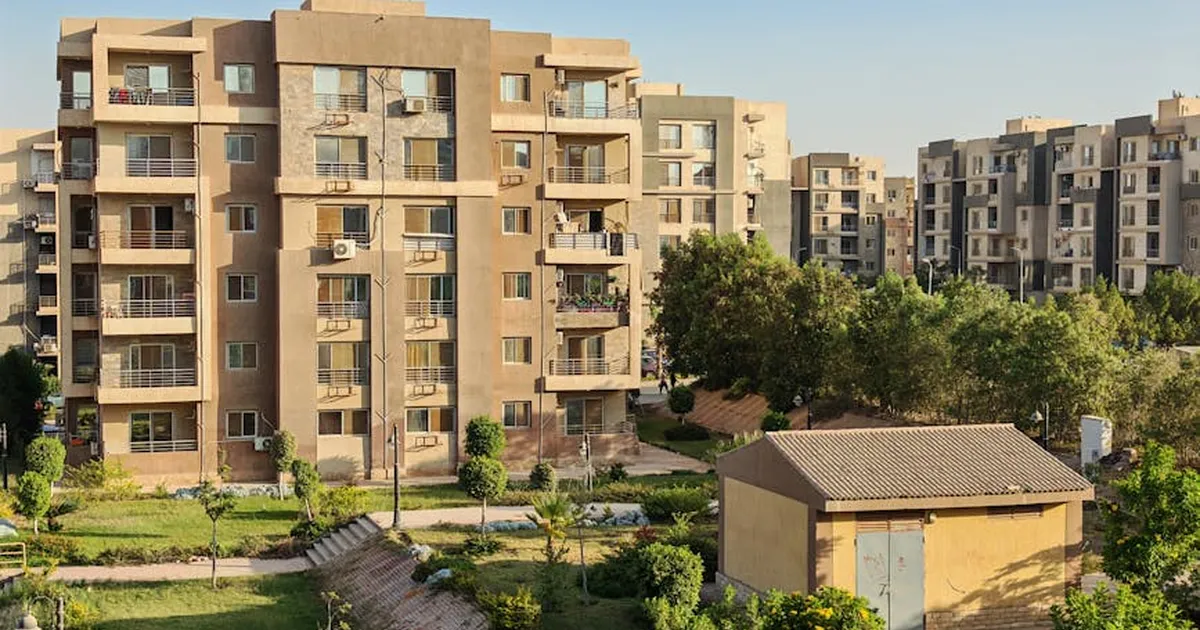
Ahmedabad Records 6,745 New Residential Units In Q1 2026 With 30 Per Cent Quarterly Jump As City Emerges As India's Fastest-growing Metro For Real Estate

Ahmedabad Launches 6,745 Residential Units in Q1 2026, Up 30% Quarterly With Metro & Games Driving Growth
Ahmedabad's residential real estate market accelerated sharply in the first quarter of 2026, recording 6,745 new unit launches—a 30% jump from the previous quarter and 29% year-on-year growth, according to research data from major market analysts. This performance exceeded the city's three-year quarterly average by approximately 31%, signaling robust developer confidence and strong buyer demand. The West peripheral submarket emerged as the primary growth driver, accounting for 37% of total launches, followed by East peripheral (22%) and North (13%). This geographic concentration reflects strategic developer positioning ahead of major infrastructure milestones, including the Commonwealth Games 2030 and the newly operational Metro Phase 2 corridor.
Segment-Wise Performance: Mid-Segment Leads, Luxury Doubles Year-on-Year
The mid-segment dominated supply dynamics, capturing 51% of all launches with a remarkable 74% quarter-on-quarter surge. High-end and luxury segments nearly doubled year-on-year to 36% of total launches, reflecting strong investor appetite for premium properties. Affordable housing, however, moderated to 18% growth due to supply concentration in limited pockets and rising land costs—a constraint that may persist as the city's land availability tightens in established zones. This segment diversification indicates Ahmedabad is transitioning from a budget-focused market toward a more balanced, multi-income ecosystem.
Demand Momentum Outpaces Supply in Key Corridors
Housing demand surged 21.4% in Q1 2026, with average property rates climbing 1.4%, according to developer data. The strongest demand concentrated in well-connected micro-markets: SG Highway and Bopal emerged as the most in-demand zones, driven by proximity to employment hubs and metro connectivity. Chandkheda and Motera, benefiting from Metro Phase 2's full operational status, saw investor inflows targeting the spillover effect from GIFT City's expansion. Rental growth accelerated 1.3% quarter-on-quarter and 3% year-on-year, led by Western corridors, while citywide capital values posted a modest 3% annual appreciation. This rental momentum—6% year-over-year according to some surveys—suggests strong fundamentals for both owner-occupiers and buy-to-let investors.
Infrastructure Catalysts Driving Developer Launches
Three major infrastructure projects are reshaping Ahmedabad's real estate landscape. Metro Phase 2 (28.25 km extension) became fully operational in Q1 2026, connecting Motera, Gandhinagar, and GIFT City to central Ahmedabad. Early data suggests 15% projected price appreciation over 18 months in metro-adjacent zones. The Commonwealth Games 2030 infrastructure push is accelerating development in North and West Ahmedabad, with the Sardar Vallabhbhai Patel Sports Enclave and Gujarat Police Academy Sports Hub driving investor interest. GIFT City, Gujarat's global financial hub, continues attracting corporate demand, spurring residential launches in the Northern corridor, which accounted for approximately 50% of Q2 2026 launches. These catalysts explain the West peripheral submarket's outsized performance in Q1.
Market Pricing & Affordability Snapshot
Ahmedabad remains India's most affordable major metro, with average property rates near ₹3,120–₹4,820 per square foot as of Q3 2025–Q1 2026. Premium zones like Satellite and Prahlad Nagar command ₹9,500–₹13,500 per square foot, while mid-segment areas (Bopal, South Bopal, Shela) range ₹5,000–₹7,500 per square foot. Emerging suburbs (Narol, Odhav, Vastral) offer entry points at ₹3,800–₹5,000 per square foot. Rental yields remain attractive: Chandkheda delivers 4.0–4.8%, Gota 3.8–4.5%, Bopal 3.5–4.2%, and premium zones 2.8–3.6%—among India's highest for major metros. Despite 10–12% price appreciation from 2024 levels, affordability remains intact compared to Mumbai, Bengaluru, and Delhi NCR.
Inventory & Absorption: Healthy Balance, Not Oversupply
Ahmedabad's unsold inventory stands at approximately 36,231 units with a quarters-to-sell ratio of 7.6, translating to less than two years of supply at current sales rates. This metric indicates a balanced market—neither overheated nor undersupplied. Absorption has accelerated: Q1 2026 sales momentum outpaced the aggressive launches of H1 2025 (when 22,000+ units were launched), suggesting developer supply is now better calibrated to actual demand. However, project quality and location remain critical differentiators. Well-located projects near metro stations and employment hubs are selling fast, while poorly planned projects in disconnected areas are struggling to gain traction.
Comparative City Performance: Ahmedabad Outpaces Delhi NCR & Hyderabad
Among India's top eight residential markets in Q1 2026, Mumbai led with 19,775 units (25% quarterly growth), followed by Bengaluru (12,664 units) and Pune (11,371 units), which collectively drove 60% of national launches. Ahmedabad's 6,745 units ranked fourth, ahead of Delhi NCR (9,677 units) and Hyderabad (9,126 units)—both of which saw supply moderation. Kolkata recorded the sharpest quarterly growth at 48% with 2,222 units, but from a smaller base. Across the top eight cities, 75,283 new units launched in Q1 2026, representing a 2% quarterly increase and 1% year-on-year growth. Ahmedabad's 30% quarterly jump stands out as exceptional, positioning the city as a genuine growth outlier alongside Kolkata.
Risks & Market Headwinds to Monitor
While momentum is strong, several risks warrant caution. Rising land costs are constraining affordable housing supply, potentially pricing out first-time homebuyers in the ₹30–50 lakh segment. If RBI raises interest rates, the ₹50 lakh to ₹1 crore segment—which represents 50% of market sales—could face demand compression. Commonwealth Games construction timelines, while generally on track, carry execution risk; any delays could dampen investor sentiment. Rental yield compression is emerging in premium zones as prices rise faster than rents; yields below 3% would reduce investment attractiveness. Finally, GIFT City's ability to attract sufficient corporate anchors remains unproven; underperformance could deflate the Northern corridor's growth narrative.
Expert Analysis: Why Ahmedabad Is Breaking Out
Ahmedabad's Q1 performance reflects a structural shift, not cyclical froth. The city has transitioned from an industrial hub into a modern urban center with world-class infrastructure: Metro Phase 2 connectivity, smart city initiatives, improved road networks, and township developments. This infrastructure maturity is attracting a new class of buyer—young professionals, entrepreneurs, and NRI investors seeking balance between affordability and lifestyle. NRI investment has jumped to 12–15% of total purchases in 2025 (from 8–10% in 2023), driven by RERA transparency, cultural connection with the Gujarati diaspora, and 3–5% rental income potential. The city's strong industrial base (textiles, manufacturing, IT, pharmaceuticals) ensures end-user demand rather than speculative buying. Unlike cyclical real estate booms, Ahmedabad's growth is anchored in genuine economic diversification and population inflow.
What to Expect Next: Q2 2026 & Beyond
Q2 2026 data already shows 6,194 units launched, suggesting the quarterly run-rate may moderate from Q1's exceptional 30% jump—a normal seasonal pattern. Developers are expected to maintain healthy launch pipelines through 2026–2027, with particular focus on the Northern corridor (GIFT City spillover) and West peripheral zones (Commonwealth Games proximity). Absorption should remain strong given the 21.4% demand surge, but watch for supply-demand imbalances in specific micro-markets. Rental growth is projected to sustain 5–7% annually, supported by metro connectivity and corporate job creation. Capital appreciation of 7–8% annually is realistic for well-located projects, with metro-adjacent zones potentially reaching 10–12% by 2027 as Commonwealth Games infrastructure nears completion.
Investment Implications: Who Should Buy Now?
End-users seeking primary residence: Buy now in established areas (Satellite, Prahlad Nagar, Bopal) if you need a home. Prices will only rise, and waiting means paying 10–15% more by 2027–2028. Focus on metro-connected locations for best value and rental potential.
Mid-term investors (5–7 year horizon): Target Chandkheda, Motera, Gota, and Shilaj. Metro connectivity and Commonwealth Games proximity offer 12–15% annual appreciation potential through 2028. These zones are in primary growth phase with "early mover advantage" pricing.
Rental income seekers: Chandkheda (4.0–4.8% yield) and Gota (3.8–4.5% yield) offer the best risk-adjusted returns. Mid-segment 2BHK/3BHK apartments in well-connected areas deliver consistent 6% rental growth.
NRI investors: Ahmedabad's RERA transparency, affordability vs. Mumbai/Bangalore, and 3–5% rental yields make it ideal for diversification. South Bopal, Prahlad Nagar, and Satellite remain preferred for gated community living and professional management.
The Bottom Line
Ahmedabad's Q1 2026 performance—6,745 units, 30% quarterly growth, 21.4% demand surge—confirms the city's emergence as India's fastest-growing metro for residential real estate. This is not a temporary spike but a structural rerating driven by Metro Phase 2, Commonwealth Games infrastructure, GIFT City expansion, and a maturing urban ecosystem. At ₹3,120–₹4,820 per square foot average, the city remains India's most affordable major metro while delivering 7–8% annual appreciation. For homebuyers and investors, the window for entry at current valuations is narrowing. Well-connected micro-markets will see 12–15% appreciation by 2028 as infrastructure projects complete. The question is not whether to invest in Ahmedabad, but where and when—and the answer is: well-connected areas near metro stations and employment hubs, and the time is now, before Commonwealth Games construction activity pushes prices further.
Questions & Answers (0)
Terms & Conditions — Q&A
By submitting a question on RealtyPromoo, you agree to these terms:
1. Content Policy
- Your question must be a genuine real estate query.
- No abusive, defamatory, or promotional content.
- No personal contact info, broker referrals, or spam.
- Questions are reviewed by AI and may be edited for clarity, grammar, or politeness before publication.
2. Publication
- Your first name + last initial (e.g., "Rahul S.") will be displayed publicly with the answer.
- Your full name, phone number, and email are never displayed publicly.
- Once published, your question and answer become part of RealtyPromoo's content.
3. Phone & Email
- Your phone number is required so our team can share the answer with you on WhatsApp and assist with your query.
- Your phone number and email are stored securely and may be used by RealtyPromoo or its sales team to contact you regarding your query or related properties.
4. Answer Accuracy
- Answers are generated by AI based on publicly available information and the page context.
- Answers are informational only — not financial, legal, or investment advice.
- Always verify pricing, RERA status, and possession dates with the developer before any transaction.
- RealtyPromoo is not liable for decisions made based on AI-generated answers.
5. Pre-RERA / Pre-Launch Projects
- Some listed projects are pre-RERA / pre-launch. These listings are informational only.
- No booking, sale, or agreement is permitted before RERA registration.
- "Express Your Interest" forms collect contact details for future communication, not advance bookings.
6. Moderation
- RealtyPromoo reserves the right to delete, edit, or refuse to publish any question or answer.
7. Privacy
- Your data is handled per our Privacy Policy.
8. Jurisdiction
- These terms are governed by the laws of India.
- Disputes are subject to the courts of Noida, Uttar Pradesh.
Be the first to ask a question. Get an answer in seconds.
Questions & Answers
This article was drafted by Shreya Tiwari, Real Estate Content Writer (Freelancer) with research support from artificial intelligence. AI assisted in gathering and summarizing information from primary news sources and official statements, and the final content was reviewed by our editor before publishing. News pages are timestamped at the time of writing and are not updated after publication.
Sources consulted: Primary press releases & company statements · Tier-1 business news (Economic Times, Livemint, Moneycontrol, Business Standard) · BSE / NSE corporate disclosures · Government notifications · State RERA filings (where relevant).
Published: 20 May 2026 · Spot an error? Let us know
Projects mentioned in this article
 New Launch
Birla Punya
by Birla Estates Private Limited
Sangamwadi, Central Pune, Pune
₹86 Lakhs – ₹4.34 Crores
1 BHK, 2 BHK, 3 BHK, 3.5 BHK, 4.5 BHK
 Under Construction
Raheja Amaltis
by K Raheja Corp Homes (k Raheja Corp Real Estate Private Limited)
Sion West, Central Mumbai, Mumbai
₹6.03 Cr – ₹11 Cr
3 BHK, 3.5 BHK, 4 BHK
 Under Construction
Century Liva
by Century Real Estate Holdings Pvt. Ltd.
Yelahanka, Bangalore
₹1.59 Cr – ₹6.30 Cr
3 BHK, 4 BHK, Penthouse
 Pre-Launch
Century Midtown
by Century Real Estate Holdings Pvt. Ltd.
Devanahalli, Bangalore
₹82 Lakhs – ₹1.93 Cr (Apartments) | ₹98 Lakhs onwards (Plots)
1 BHK, 2 BHK, 3 BHK Apartments + Residential Plots
Related News
 News
News
Maharashtra Government Advances Mumbai Water Metro Project To Expand Urban Water Transport Network Across Mumbai Metropolitan Region Impacting Waterfront And Harbour-Adjacent Real Estate
Maharashtra advances Water Metro project with 45 terminals across MMR by 2036. Impact on Worli, Bandra, Versova, Navi Mumbai real estate prices and waterfront...
 News
News
Mumbai Water Metro Project Approved To Reduce Congestion Across Mumbai Metropolitan Region With Water Transport Network Expansion Boosting Waterfront Real Estate Values
Maharashtra approves ₹6,067 crore Mumbai Water Metro Project on March 17, 2026. Phase 1 includes 16 routes, 26 terminals across MMR. Impact on Bandra, Worli...
 News
News
Netflix Leases 41,000 Sq Ft At CapitaLand ITPH Hitec City Hyderabad Marking First Major Base In City And Signalling New Wave Of Tech-Driven Real Estate Demand
Netflix signs a major lease for its first office in Hyderabad at CapitaLand's ITPH, Hitec City. Analysis of the impact on residential real estate in Madhapur.
 News
News
Jaipur Real Estate Market Records Strong Growth In Q1 2026 As Delhi–Mumbai Expressway Connectivity And Rajasthan Tourism Drive Premium Housing Demand
Jaipur real estate market records strong Q1 2026 growth driven by Delhi-Mumbai Expressway connectivity and premium housing demand. 18% YoY appreciation...