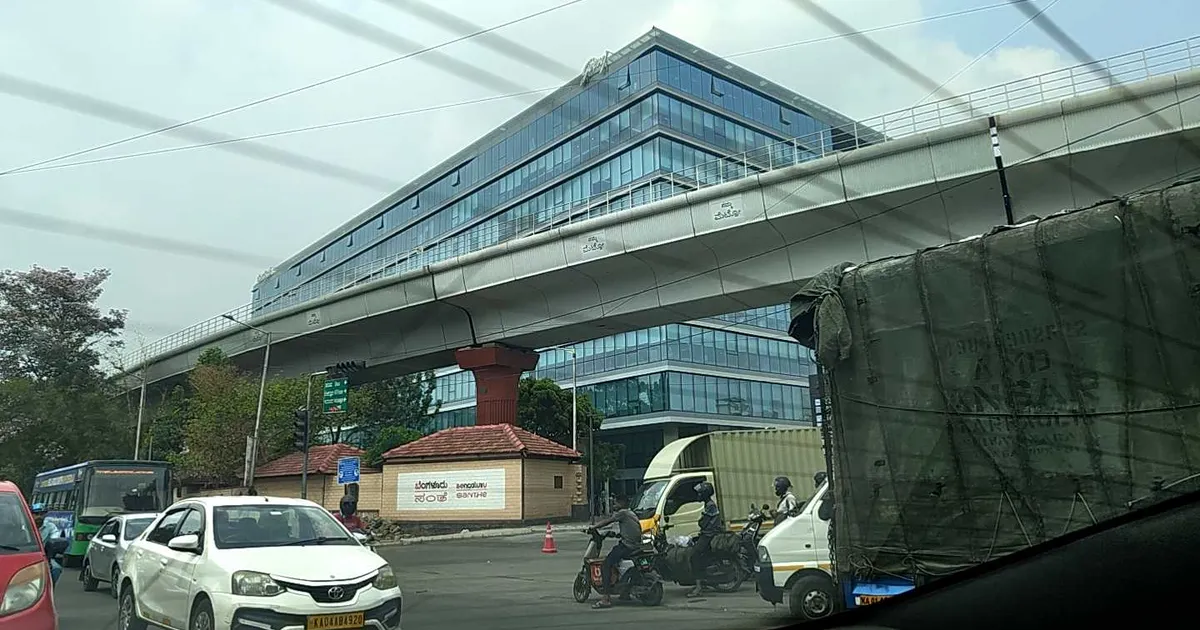
Photo by Sarthak Bhoyar via Google Places
Nagpur

About Nagpur Real Estate
Nagpur sits at the precise geographic heart of India — and that is not a metaphor. Every major expressway, rail corridor, and logistics chain in the country passes through or near it, which is why the city's real estate story over the last five years has been one of the most compelling in the country's Tier-II landscape. Nagpur has emerged as the top Tier-II city in India's real estate market, ahead of Jaipur and Lucknow. That ranking reflects something real: a convergence of government investment, industrial expansion, and an increasingly confident middle class that is choosing to buy rather than rent.
The demand engine here is genuinely diverse. The city's transformation from a regional center to a national economic powerhouse is creating compelling opportunities across office, retail, and industrial real estate sectors. MIHAN — the Multimodal International Hub Airport at Nagpur — anchors the south corridor and draws IT firms, aerospace companies, and logistics operators. Government employment remains the bedrock of demand in established areas like Civil Lines and Dharampeth. And the Samruddhi Mahamarg expressway has opened an entirely new chapter for the city's western and peripheral zones. The current market phase is best described as a sustained growth cycle with selective acceleration — not a speculative boom, but not a quiet plateau either. Prices are moving, new launches are selling, and the fundamentals are sound.
Why Invest in Nagpur
The appreciation story here is built on infrastructure, not hype. From 2022–23, demand began picking up strongly, driven by low home loan rates and increased desire for homeownership, with prices rising 8–12% across most areas. In 2023–24, prices accelerated further — the fastest-developing areas like Besa, Khapri, and Wardha Road saw 12–18% appreciation. That kind of consistent, compounding return puts Nagpur comfortably ahead of fixed deposits (currently yielding 6.5–7%) and broadly in line with gold over the same period — but with the added advantage of rental income on top.
The infrastructure pipeline is what separates Nagpur from most Tier-II cities. Three catalysts stand out:
- Samruddhi Mahamarg (Mumbai–Nagpur Expressway): In June 2025, the final stretch opened, marking full connectivity between Nagpur and the Mumbai Metropolitan Region. By halving journey times to approximately 8 hours, the expressway lowers logistics costs and elevates quality of life for intercity commuters and businesses. This is already repricing land along the Wardha Road and Hingna corridors.
- Nagpur Metro Phase 2: The project is expected to cost ₹6,708 crore and will be managed by Maharashtra Metro Rail Corporation Limited (MahaMetro). It is financed by the Asian Development Bank, the European Investment Bank, and both the Central and state governments, and is expected to be completed by November 2027.
- MIHAN SEZ: The Multi-modal International Cargo Hub and Airport at Nagpur (MIHAN) is creating a ripple effect. IT parks, logistics hubs, and industrial growth around MIHAN are drawing professionals from all over the country.
Based on current property price trends in Nagpur, most analysts expect prices in key corridors to rise a further 10–15% through 2026, driven by metro completion, increased demand, and limited new land supply in developed areas. For a buyer entering today, the risk-reward calculus looks favourable — especially in corridors that are still in the price-discovery phase.
One honest caveat: current city-wide rental ranges of ₹60–90 per sq. ft are expected to appreciate significantly, driven by infrastructure improvements and growing corporate demand from Global Capability Centres (GCCs) recognising Nagpur's cost advantages and reduced attrition rates compared to established technology hubs. But rental yields in residential segments remain modest at 3–5% in most localities — Nagpur is primarily an appreciation play, not a yield play.
Price Trends
The table below captures current average transacted prices across Nagpur's key residential localities, based on RealtyPromoo research aggregated from broker channel data and market intelligence as of mid-2026.
| Locality | Current Avg Price (₹/sqft) | 1-Year Change (%) | 3-Year Change (%) | Budget Segment |
|---|---|---|---|---|
| Civil Lines | ₹9,500–₹11,000 | +28–30% | +55–65% | Ultra-Premium |
| Dharampeth | ₹8,000–₹12,000 | +12–15% | +40–50% | Premium |
| Sadar / Sitabuldi | ₹7,500–₹10,500 | +10–12% | +35–45% | Premium |
| Wardha Road / Besa | ₹4,800–₹6,500 | +14–18% | +50–60% | Mid-Segment |
| Khapri | ₹4,500–₹6,000 | +12–16% | +45–55% | Mid-Segment |
| Manish Nagar | ₹4,500–₹5,800 | +10–13% | +35–45% | Mid-Segment |
| Narendra Nagar | ₹4,800–₹5,500 | +8–10% | +30–38% | Mid-Segment |
| Butibori | ₹3,200–₹4,500 | +15–20% | +110–120% | Affordable–Mid |
| Hingna | ₹2,500–₹3,500 | +10–14% | +85–95% | Affordable |
| Kamptee Road / Kalamna | ₹3,000–₹4,200 | +8–12% | +30–40% | Affordable–Mid |
The standout appreciation story belongs to the peripheral industrial corridors. Butibori (120%), Dongargaon (120%), and Kothewada (116.7%) are the localities with the highest price appreciation for property in the last 3 years. These numbers reflect a genuine structural shift — land that was once considered too distant from city conveniences is now being absorbed by the logistics boom and the Samruddhi Mahamarg connectivity. Meanwhile, Civil Lines continues to command a premium that reflects its scarcity: there simply is no new land to develop in that address, and as of early 2025, real estate prices in Civil Lines reached an average of ₹10,394 per square foot, reflecting a 30.35% annual increase. That kind of jump in a mature, supply-constrained neighbourhood is a signal worth noting.
The mid-segment Besa–Wardha Road corridor is the sweet spot for most buyers today — the most popular mid-segment corridors like Besa and Wardha Road are priced between ₹4,800 and ₹6,500 per sq. ft. — offering modern gated communities, metro proximity, and a clear appreciation runway ahead of Phase 2 completion.
Top Localities for Homebuyers
Civil Lines
This is Nagpur's address of last resort for those who want nothing compromised. Wide tree-lined roads, bungalow plots, proximity to government offices, and the social infrastructure of an established neighbourhood — NMC offices, Nagpur High Court, and the best private schools all within a short drive. Best for senior government officials, established professionals, and buyers who treat real estate as legacy rather than investment. Prices range from ₹9,500 to ₹11,000 per sq. ft for apartments; bungalow plots command a significant premium above that.
Dharampeth
Dharampeth is a well-established residential and commercial hub known for its educational institutions, shopping centres, and cultural heritage. It is the neighbourhood that long-time Nagpurians aspire to — schools like Centre Point and Bhavan's are within walking distance, the food scene along Wardha Road is excellent, and the social fabric is tight-knit. Best for families with school-going children. Prices range from ₹8,000 to ₹12,000 per sq. ft.
Sadar
Sadar is Nagpur's commercial heart with a residential soul. The area around Sitabuldi Fort and the Sadar market is dense, walkable, and genuinely urban in a way that newer townships are not. Access to Nagpur Central Railway Station is under 2 km. Best for buyers who want city-centre living and can tolerate older building stock. Prices range from ₹7,500 to ₹10,500 per sq. ft.
Wardha Road / Besa Corridor
The Besa and Wardha Road Corridor is arguably the most talked-about micro-market in Nagpur today. Flats in Besa offer a rare combination of affordability, modern amenities, green surroundings, and strong appreciation. The corridor is roughly 10–14 km from the city centre but well-connected by road and increasingly by metro. Best for young professionals working at MIHAN or in South Nagpur's IT parks, and for families seeking newer construction. Prices range from ₹4,800 to ₹6,500 per sq. ft.
Khapri
With the international airport nearby and growing commercial activity, Khapri has become a top pick for both homebuyers and investors. Gated communities here are well-designed, and the area benefits from both airport proximity and MIHAN spillover demand. Best for frequent flyers, IT professionals, and investors seeking rental income from corporate tenants. Prices range from ₹4,500 to ₹6,000 per sq. ft.
Manish Nagar
Manish Nagar occupies a comfortable mid-city position — west of the core, south of the railway line — with good schools, hospitals like Wockhardt and Alexis Multispeciality nearby, and a residential character that has held its quality over decades. Best for families relocating from other cities who want established infrastructure without the premium of Civil Lines or Dharampeth. Prices range from ₹4,500 to ₹5,800 per sq. ft.
Narendra Nagar
As of early 2025, property prices in Narendra Nagar stand at approximately ₹5,243 per square foot, with a 2% quarter-on-quarter increase. The area is quieter than Dharampeth, with wider roads and a more suburban feel. Good for families who want space and calm within a reasonable distance of the city centre. Prices range from ₹4,800 to ₹5,500 per sq. ft.
Kamptee Road
Kamptee Road is Nagpur's underrated northern corridor — prices are accessible, the road itself is well-maintained, and the upcoming Metro Phase 2 Kapsi extension will bring this area into a new connectivity bracket. Best for budget-conscious buyers and first-time homeowners. Prices range from ₹3,000 to ₹4,200 per sq. ft. The honest caveat: social infrastructure (hospitals, schools) is still catching up with residential supply here.
Hingna
Hingna sits at the western edge of the city, adjacent to the industrial belt and directly on the Samruddhi Mahamarg alignment. Hingna, with its industrial belt and upcoming townships, offers excellent growth potential. It is a locality for buyers with a 5–7 year horizon rather than those seeking immediate liveability. Prices range from ₹2,500 to ₹3,500 per sq. ft — among the most affordable entry points in the city.
Butibori
Butibori is Nagpur's industrial township, roughly 25 km from the city centre along the Mumbai highway. The area has seen extraordinary price appreciation driven by warehousing and manufacturing demand. Best for pure investors and for employees of the MIDC industrial zone who want to live close to work. Prices range from ₹3,200 to ₹4,500 per sq. ft. Not ideal for families who need schools and hospitals nearby — those amenities are still limited.
Top Localities for Investors
Wardha Road / Besa — Metro + MIHAN Double Trigger
This is the corridor that institutional investors are watching most closely. The area has seen consistent 10–15% annual price growth and continues to attract residential projects from leading developers. The MIHAN SEZ is the demand anchor for rentals; the Metro Phase 2 extension toward MIHAN is the capital appreciation trigger. Rental yields here run at approximately 3.5–4.5% for well-configured 2BHK units. Entry price is still reasonable at ₹4,800–₹6,500 per sq. ft, and the upside to ₹8,000–₹9,000 per sq. ft over a 5–7 year horizon is credible given the infrastructure pipeline.
Khapri — Airport Zone Pricing Arbitrage
Khapri is priced below what comparable airport-zone localities command in Pune or Hyderabad, and that gap will narrow as MIHAN matures. Medical Square (5.8%), Chinchbhuwan (5.5%), and Hingna Road (5.2%) are among the areas that offer the highest rental returns in Nagpur — and the Khapri–MIHAN belt is benefiting from the same corporate tenant base that drives those numbers. Investors targeting GCC employee rentals should look here first.
Butibori — Industrial Corridor Appreciation Play
Butibori has recorded 120% price appreciation over the last 3 years — the highest in the city. That number is partly a low-base effect, but the underlying driver is real: warehousing and logistics demand along the Samruddhi Mahamarg is structural, not cyclical. The risk is liquidity — resale in this micro-market is slower than in the city core, and buyers need to be prepared for a 4–6 year hold.
Hingna — Metro Phase 2 Pre-Launch Play
Phase 2 of Nagpur Metro includes the Lokmanya Nagar–Hingna extension , which will be the most transformative connectivity upgrade this locality has ever seen. Current prices at ₹2,500–₹3,500 per sq. ft offer entry at a level that is likely to look very different once metro operations begin. Nagpur Metro expansion areas including Ambazari and Lokmanya Nagar are already repricing, and the Hingna extension is next in line. Risk: possession timelines for under-construction projects in this zone have historically slipped.
Samruddhi Circle / Nagpur Entry Node
Areas such as Samruddhi Circle are becoming prime investment hubs, with urbanisation trends and rising land values attracting both developers and buyers. The expressway's Nagpur terminus has created a new commercial and residential node that did not exist five years ago. Plot investments here carry the highest risk but also the highest potential upside — this is frontier territory in the truest sense.
Kamptee Road / Kapsi — Affordable Metro-Adjacent Entry
The Prajapati Nagar–Kapsi extension is one of the four new corridors in Nagpur Metro Phase 2. Kamptee Road and Kapsi currently sit at ₹3,000–₹4,200 per sq. ft — affordable enough to absorb the 2–3 year wait for metro operations while still offering meaningful appreciation when connectivity improves. Best for investors with a ₹40–₹60 lakh budget who want metro-adjacent exposure without the premium of Besa or Khapri.
Infrastructure & Connectivity
Nagpur Metro — Phase 1 (Operational)
Nagpur Metro Phase 1 operates two corridors: the Orange Line (East–West, approximately 19 km, from Automotive Square to Airport South) and the Aqua Line (North–South, approximately 19 km, from Automotive Square to MIHAN). Key stations include Sitabuldi Interchange, Zero Mile, Kasturchand Park, and Khapri. Both corridors are operational and have meaningfully changed commute patterns in South and Central Nagpur.
Nagpur Metro — Phase 2 (Under Construction, Target: 2027)
The project is expected to cost ₹6,708 crore and will be managed by MahaMetro, financed by the Asian Development Bank, the European Investment Bank, and both the Central and state governments. It is expected to be completed by November 2027 — the initial plan aimed for 2026, but delays in necessary approvals pushed the deadline to 2027. The four extensions are:
- Stage 1 (Reach 1A): A 1.7 km at-grade section with two stations, scheduled for completion by June 2025.
- Stage 2 (Reach 2A): A 6.92 km viaduct with six elevated stations, targeted for December 2025.
- Stage 3 (Reach 4A): A 5.6 km viaduct with three elevated stations, expected by December 2026.
- Stage 4 (Reach 3A): A 6.7 km viaduct with seven elevated stations, planned for March 2027.
The four new extensions are MIHAN–MIDC ESR, Automotive Square–Kanhan River, Lokmanya Nagar–Hingna, and Prajapati Nagar–Kapsi.
Samruddhi Mahamarg (Mumbai–Nagpur Expressway)
On 5 June 2025, the final 76-km stretch (Igatpuri–Amane) opened, effectively completing the 701-km corridor. The expressway links the Jawaharlal Nehru Port Trust (JNPT) in Mumbai and the Nagpur Multimodal International Hub Airport at Nagpur (MIHAN). Travel time between Nagpur and Mumbai is now approximately 8 hours. One ongoing issue: the Vadpe interchange, which will connect Samruddhi Mahamarg to the Delhi–Mumbai Expressway and the national highway network, is under construction and expected to be completed around mid-2026.
Airport
Nagpur has an airport located near Sonegaon, 7.5 km to the southwest of Nagpur city, connected to 37 destinations within India. It also caters to international destinations including Saudi Arabia, Sharjah, Doha, Dubai, Singapore, and Bangkok. MIHAN, the dedicated cargo and aviation SEZ, is approximately 15 km from the city centre via Wardha Road.
Railway Connectivity
Nagpur Central Railway Station is an important railway junction connected to other major metro cities of India via a fully electrified broad gauge railway track. Apart from metropolitan regions, Nagpur is also connected to cities like Ahmedabad, Hyderabad, Pune, Jammu, Amritsar, Lucknow, Varanasi, Kochi, Thiruvananthapuram, Bangalore, Mangalore, and Visakhapatnam through 160 trains passing through the city. Within the city limits, there are smaller railway stations at Ajni, Itwari, Kalamna, Kamptee, and Khapri.
Road Network
The Nagpur Outer Ring Road (ORR) connects the city's peripheral zones and is the backbone of logistics movement. National Highways NH-44 (North–South corridor, Delhi to Chennai), NH-6, and NH-7 all converge at Nagpur — which is precisely why the city's logistics and warehousing sector is booming. The Ring Road also serves as the anchor for new township development in Butibori, Hingna, and Kapsi.
Government Policies & Regulations
RERA Authority
Maharashtra's real estate regulator is MahaRERA (Maharashtra Real Estate Regulatory Authority), accessible at maharera.mahaonline.gov.in. All new residential projects in Nagpur must be registered with MahaRERA before marketing or selling. Buyers should verify RERA registration numbers for any project before signing agreements — this is non-negotiable in a market where under-construction project delays have been a historical concern.
Stamp Duty in Nagpur
Nagpur falls under Maharashtra's standard stamp duty framework. For male buyers, the applicable stamp duty is 5% of the property value, plus a 1% Local Body Tax and a 1% metro cess. A 1% metro cess continues to apply in addition to stamp duty in cities like Mumbai, Pune, Thane, and Nagpur. Women buyers benefit from a concession: women buyers enjoy a 1% concession on stamp duty in Maharashtra for residential properties , bringing their effective rate to 4% + 1% LBT + 1% metro cess = 6% total. The property registration charge in Maharashtra is 1% of the property value, subject to a cap — for properties above ₹30 lakh, a flat fee of ₹30,000 is applicable in cities like Nagpur.
Ready Reckoner Rates
Ready Reckoner Rate is the minimum government-prescribed value below which no property in Maharashtra can be legally sold. Ready Reckoner rates, which form the base value for calculating stamp duty in Maharashtra, increased by 3.9% in 2025. The state government announced a revised Ready Reckoner Rate for FY 2025–26, effective from April 1, 2025. Buyers should be aware that if your agreed purchase price is ₹50 lakh but the ready reckoner rate values the property at ₹60 lakh, stamp duty will be calculated on ₹60 lakh.
Family Transfer Concession
Family transfers attract nominal stamp duty of ₹200 when transferring residential or agricultural property to close relatives. This is a meaningful concession for estate planning and inter-family property transfers.
Maharashtra Stamp (Amendment) Act, 2025
The Maharashtra Stamp Act, 1958 has been updated through the Maharashtra Stamp (Amendment) Act, 2025. Key changes include stamp duty rates on legal documents like affidavits, partnership deeds, and agreements not otherwise specified, which have increased from ₹100 to ₹500. Online property registration has been expanded statewide, reducing the need for physical visits to Sub-Registrar offices.
Living in Nagpur
Climate — The Honest Picture
Nagpur's climate is its most discussed drawback, and it deserves honest treatment. By April end and May, the mercury steadily hovers around 45 degrees Celsius plus for days and weeks; and in May, sometimes during a critical heatwave, it touches almost 48 or 49 degrees Celsius. Summers here are genuinely brutal, and anyone considering a move to Nagpur should factor air-conditioning costs into their monthly budget. The monsoon, however, is generous — the average annual rainfall is 1,161.54 mm, of which almost 90% is received during the south-west monsoon season with the maximum in July. Winters (November to February) are Nagpur's finest season — cool, dry, and very pleasant.
Air Quality
Air quality in Nagpur is moderate by Indian city standards. The current real-time AQI level in Nagpur is 87 (Moderate). The city fares significantly better than Delhi, Kanpur, or Lucknow, but it is not Mysuru or Coimbatore either. Industrial zones in Butibori and Hingna do generate localised pollution, and buyers choosing those corridors should be aware of that.
Water Supply
The municipal water supply in Nagpur is transitioning from intermittent to continuous supply in phases — a genuinely progressive infrastructure initiative that most Indian cities have not attempted. Nagpur gets water from Navegaon Khairi dam on Pench River and from Kanhan River. In newer townships and gated communities, water supply is generally reliable. In older parts of the city, supply can still be intermittent during peak summer months.
Healthcare
Nagpur is emerging as a major medical, logistics, and education hub. The city has strong tertiary healthcare — AIIMS Nagpur (Sawangi), Wockhardt Hospital, Alexis Multispeciality Hospital, Kingsway Hospital, and Orange City Hospital are all well-regarded. For a Tier-II city, the depth of medical infrastructure here is unusual and is one of the genuine reasons families from smaller towns in Vidarbha are choosing Nagpur over Pune or Mumbai.
Education
Nagpur has a strong institutional base: the city has a substantial technology talent pool of approximately 60,000 experienced professionals drawn from leading institutions including IIM Nagpur, IIIT Nagpur, IMT Nagpur, and the Visvesvaraya National Institute of Technology. For school-level education, Centre Point School, Bhavan's Nagpur, DPS Nagpur, and Somalwar High School are among the most sought-after institutions.
Food, Culture, and Weekend Life
Nagpur is the orange capital of India, and its food identity is strong — the Saoji cuisine (fiercely spiced mutton and chicken curries), the tarri poha breakfast culture, and the Irani chai at old-city tea houses are things that residents genuinely love and miss when they leave. The cultural calendar includes the Nagpur Literature Festival, the winter session of the Maharashtra Legislature (which brings the entire state government to the city), and a thriving Marathi theatre scene.
Weekend getaways are excellent. Pench Tiger Reserve is approximately 75 km away (under 90 minutes), Tadoba-Andhari Tiger Reserve is about 140 km, and Kanha is roughly 200 km. For a city of this size, the access to wildlife tourism is unmatched in India.
Safety and Liveability
Nagpur ranks among India's top cities for livability and holds 25th position in the Ease of Living Index 2020. Crime rates are low relative to comparable Tier-I cities, traffic congestion is manageable (though worsening in peak hours), and the city has a genuine sense of civic pride. The pace of life is slower than Pune or Hyderabad — which is a feature for some buyers and a drawback for others.
FAQ
Is Nagpur good for real estate investment in 2025–26?
Yes, with appropriate expectations. Nagpur is not a speculative market — it rewards patient investors with 5–7 year horizons. The upward trend continues with no signs of correction; new launches in premium and mid-segments are selling fast, and ready-to-move flats in Nagpur are commanding a significant premium over under-construction units. The infrastructure pipeline (Metro Phase 2, Samruddhi Mahamarg completion, MIHAN expansion) provides a credible appreciation thesis for the next 3–5 years.
Which is the best area to buy a flat in Nagpur?
Besa, Khapri, and the Wardha Road corridor are currently considered the best areas to buy property in Nagpur for investment, offering a strong combination of affordable entry prices, growing infrastructure, and consistent appreciation. For end-use and liveability, Dharampeth and Civil Lines remain the gold standard — but at a significant price premium.
What is the stamp duty on property purchase in Nagpur?
Male buyers pay 5% stamp duty + 1% Local Body Tax + 1% metro cess = approximately 7% of property value. Women buyers get a 1% concession on stamp duty, making their effective rate approximately 6%. Registration charges are capped at ₹30,000 for properties above ₹30 lakh. Always verify the applicable Ready Reckoner Rate before finalising your budget — stamp duty is calculated on the higher of the RR rate or the agreement value.
Nagpur vs Pune — which is better for investment?
Pune offers higher liquidity, a larger IT employment base, and faster price discovery. Nagpur offers lower entry prices, a longer appreciation runway, and significantly lower cost of living. If you have ₹50–₹80 lakh, Nagpur gives you a meaningfully better property than Pune at the same budget. If you need rental yield from day one, Pune's IT corridors (Hinjewadi, Kharadi) outperform Nagpur. If you're playing a 5–7 year infrastructure-led appreciation story, Nagpur's risk-reward is compelling.
What is the property price forecast for Nagpur in 2026–27?
Based on current property price trends in Nagpur, most analysts expect prices in key corridors to rise a further 10–15% through 2026, driven by metro completion, increased demand, and limited new land supply in developed areas. Infrastructure completion (Metro Phase 2, Ring Road upgrades) and continued industrial growth are expected to push prices higher — particularly in the south-west and east corridors of the city.
Are there risks to buying property in Nagpur?
Yes — and buyers should be aware of them. Peripheral localities like Butibori, Hingna, and Kapsi have seen strong appreciation on paper, but resale liquidity is limited. Under-construction project delays have been a recurring issue in this market — always verify RERA registration and check the developer's track record of delivery. Avoid illegal layouts in Mouza areas without RERA approval. Additionally, Nagpur's extreme summer heat means that properties without adequate cross-ventilation, insulation, and power backup become uncomfortable and expensive to run.
Is Nagpur a good city to live in?
For the right profile of buyer, absolutely. Nagpur ranks among India's top cities for livability and holds 25th position in the Ease of Living Index 2020. The city offers genuine affordability, excellent healthcare, strong educational institutions, and some of India's best wildlife access on weekends. The trade-offs are real: brutal summers, a slower pace of economic growth than Pune or Hyderabad, and a cultural scene that is rich but not cosmopolitan. Families, retirees, and professionals who value quality of life over career velocity tend to love it here.
How do I verify a project's RERA status in Nagpur?
Visit maharera.mahaonline.gov.in, navigate to the project search section, and enter the project name or developer name. Every registered project will show its RERA number, registered carpet area, promised possession date, and complaint history. Do this before you sign any agreement or pay any booking amount — it takes five minutes and protects your entire investment.
Questions & Answers (0)
Terms & Conditions — Q&A
By submitting a question on RealtyPromoo, you agree to these terms:
1. Content Policy
- Your question must be a genuine real estate query.
- No abusive, defamatory, or promotional content.
- No personal contact info, broker referrals, or spam.
- Questions are reviewed by AI and may be edited for clarity, grammar, or politeness before publication.
2. Publication
- Your first name + last initial (e.g., "Rahul S.") will be displayed publicly with the answer.
- Your full name, phone number, and email are never displayed publicly.
- Once published, your question and answer become part of RealtyPromoo's content.
3. Phone & Email
- Your phone number is required so our team can share the answer with you on WhatsApp and assist with your query.
- Your phone number and email are stored securely and may be used by RealtyPromoo or its sales team to contact you regarding your query or related properties.
4. Answer Accuracy
- Answers are generated by AI based on publicly available information and the page context.
- Answers are informational only — not financial, legal, or investment advice.
- Always verify pricing, RERA status, and possession dates with the developer before any transaction.
- RealtyPromoo is not liable for decisions made based on AI-generated answers.
5. Pre-RERA / Pre-Launch Projects
- Some listed projects are pre-RERA / pre-launch. These listings are informational only.
- No booking, sale, or agreement is permitted before RERA registration.
- "Express Your Interest" forms collect contact details for future communication, not advance bookings.
6. Moderation
- RealtyPromoo reserves the right to delete, edit, or refuse to publish any question or answer.
7. Privacy
- Your data is handled per our Privacy Policy.
8. Jurisdiction
- These terms are governed by the laws of India.
- Disputes are subject to the courts of Noida, Uttar Pradesh.
Be the first to ask a question. Get an answer in seconds.
Questions & Answers
This page was compiled by Aarav Mehta, Senior Property Analyst (Freelancer) using artificial intelligence to research the city's real-estate market, infrastructure, and growth trends. AI assisted in gathering data from public portals and industry reports, and the final content was reviewed by our editor before publishing. We update city profiles as market data and infrastructure announcements evolve.
Sources consulted: State RERA portal data · Industry research reports (Anarock, JLL, Knight Frank, CBRE, Colliers) · Government infrastructure announcements · City development authority publications · Tier-1 news archives · Google Maps local data.
Last reviewed: 27 May 2026 · Spot an error? Let us know
Localities in Nagpur

Mihan
1 ProjectProjects in Nagpur
 Upcoming
Godrej Nagpur Plotted Township Project
by Godrej Properties Limited
Mihan, Nagpur
₹59.99 L - ₹1.20 Cr
Residential Plots